
Free Pennsylvania CDL Practice Tests — Your Complete Study Guide
Pass your Pennsylvania CDL permit exam with 80%+ on the first try
What You Need to Study
General Knowledge
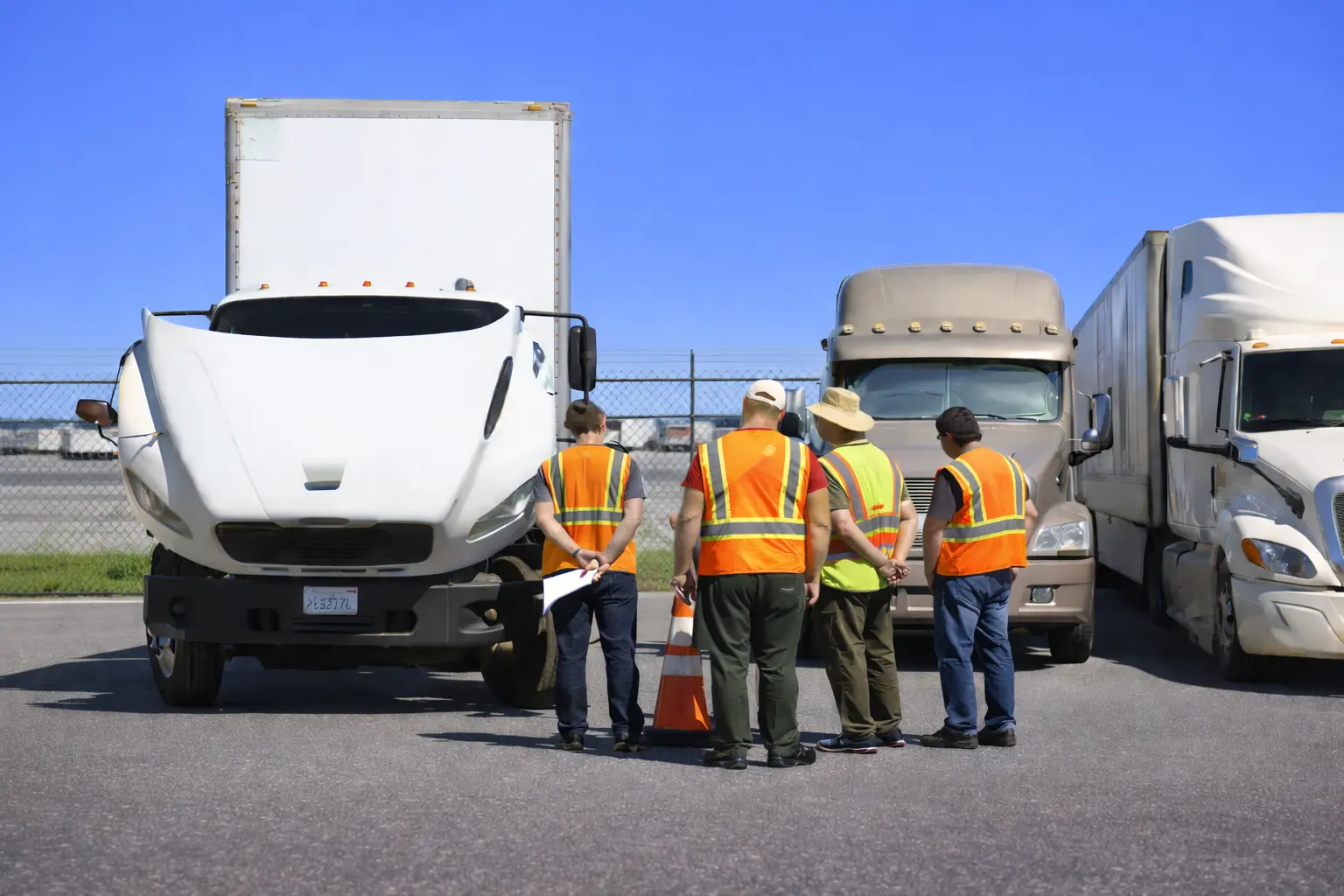
The foundation of your CDL exam. Covers traffic laws, safe driving techniques, vehicle inspection procedures, cargo handling, and federal regulations every commercial driver must understand.
Combination Vehicles
Essential for driving tractor-trailers. Covers coupling and uncoupling procedures, rollover prevention, inspecting combination vehicles, and safely maneuvering with attached trailers.
Air Brakes
Required for any vehicle equipped with air brakes. Covers how air brake systems work, dual air brake systems, inspecting air brakes, and using them safely in all conditions.
Endorsement Tests
HazMat
Required for transporting hazardous materials. Covers placarding, labeling, loading procedures, emergency response, and compliance with federal hazmat regulations.
Tanker
Required for driving tank vehicles used to transport liquids or gases in bulk. Covers safe loading, unloading, and driving techniques specific to tanker operations.
Doubles & Triples
Required for pulling double or triple trailers. Covers coupling and uncoupling multiple trailers, safe driving practices, and inspection procedures for multi-trailer rigs.
Passenger
Required for operating vehicles designed to transport 16 or more passengers. Covers passenger safety, loading, emergency exits, and pre-trip inspection requirements.
What Are You Preparing For?
Select one or more options so we can show you exactly which tests you need to take.
What You Need to Study
General Knowledge
16 sections · 800 questions
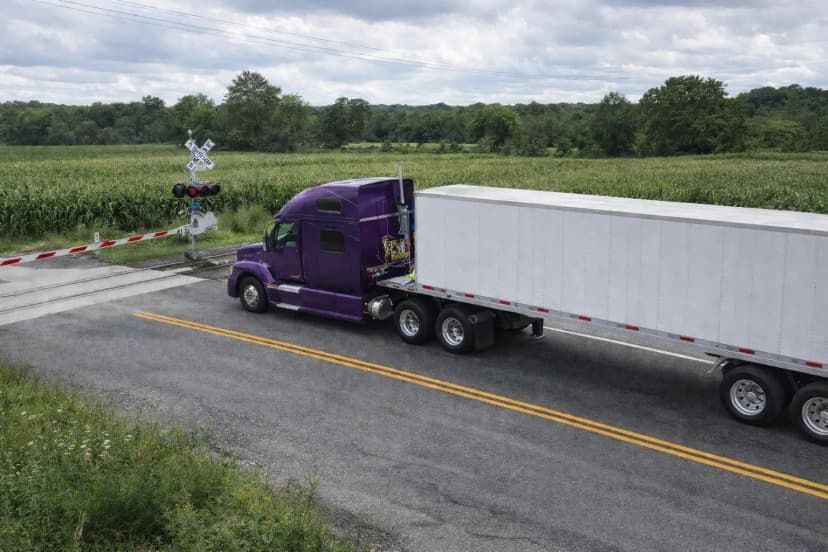
The foundation of your CDL exam. Covers traffic laws, safe driving techniques, vehicle inspection procedures, cargo handling, and federal regulations every commercial driver must understand.
Combination Vehicles
9 sections · 180 questions
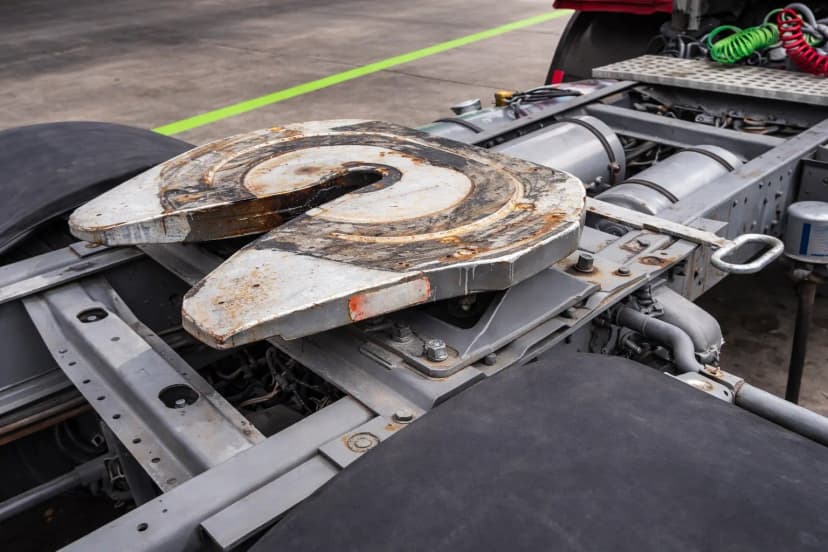
Essential for driving tractor-trailers. Covers coupling and uncoupling procedures, rollover prevention, inspecting combination vehicles, and safely maneuvering with attached trailers.
Air Brakes
6 sections · 150 questions
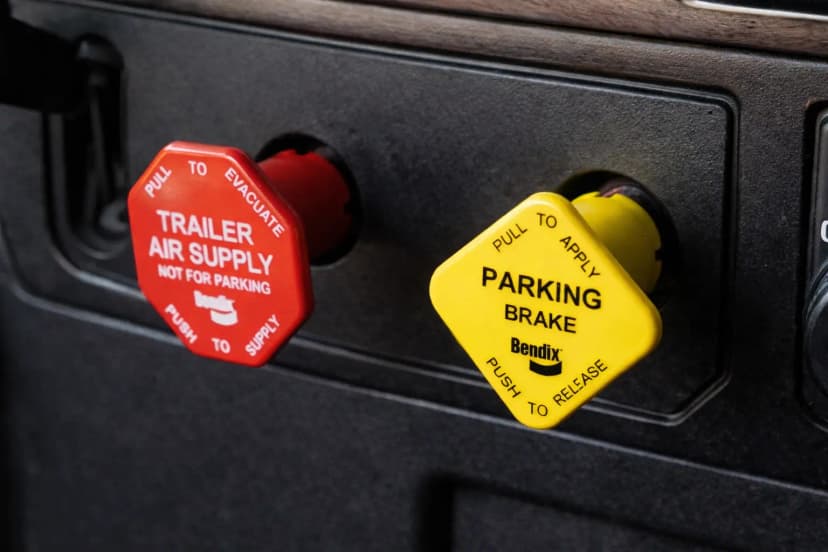
Required for any vehicle equipped with air brakes. Covers how air brake systems work, dual air brake systems, inspecting air brakes, and using them safely in all conditions.
Endorsement Tests
Additional endorsements you may need depending on the type of vehicle or cargo you plan to operate.
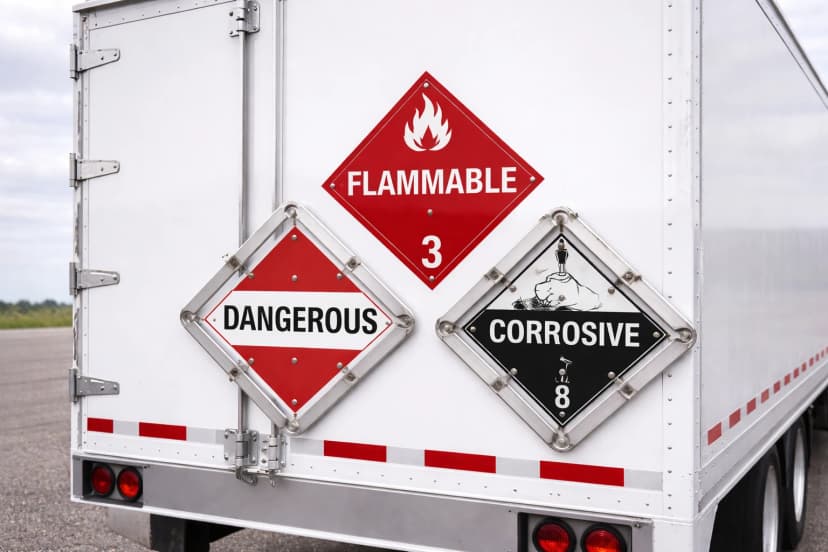
HazMat
9 sections · 202 questions
Required for transporting hazardous materials. Covers placarding, labeling, loading procedures, emergency response, and compliance with federal hazmat regulations.
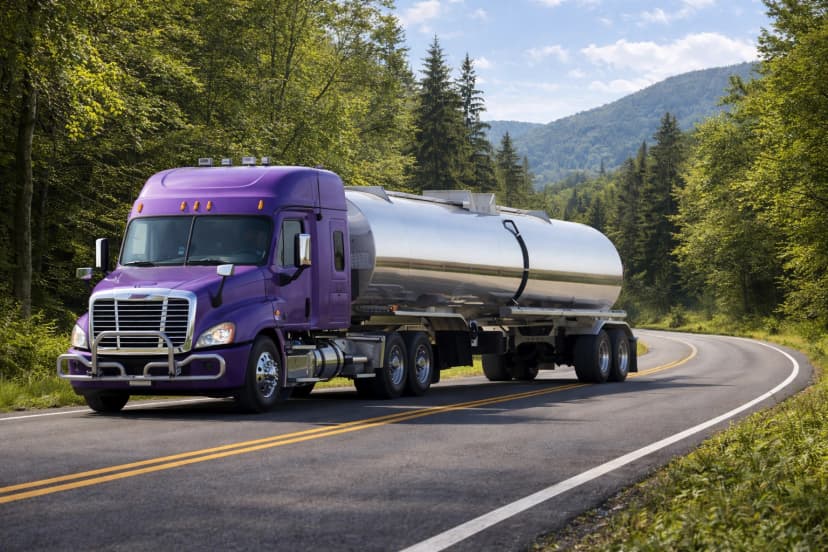
Tanker
6 sections · 133 questions
Required for driving tank vehicles used to transport liquids or gases in bulk. Covers safe loading, unloading, and driving techniques specific to tanker operations.
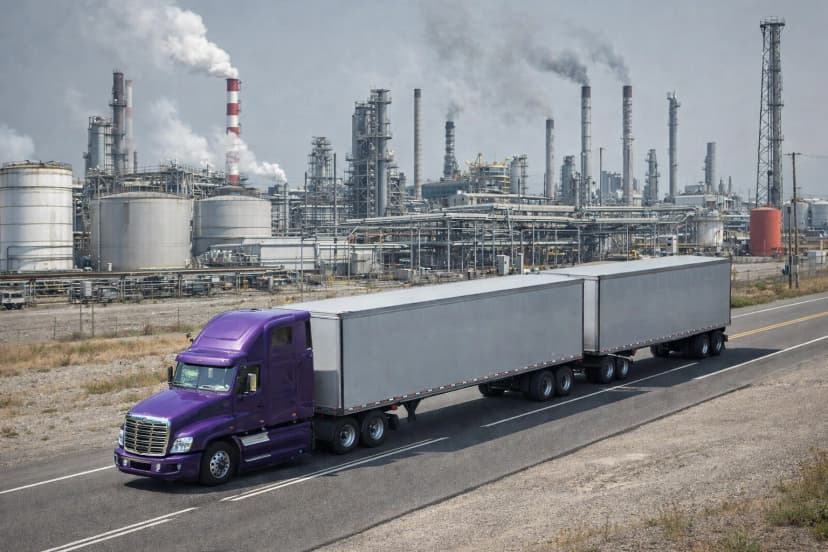
Doubles & Triples
7 sections · 144 questions
Required for pulling double or triple trailers. Covers coupling and uncoupling multiple trailers, safe driving practices, and inspection procedures for multi-trailer rigs.
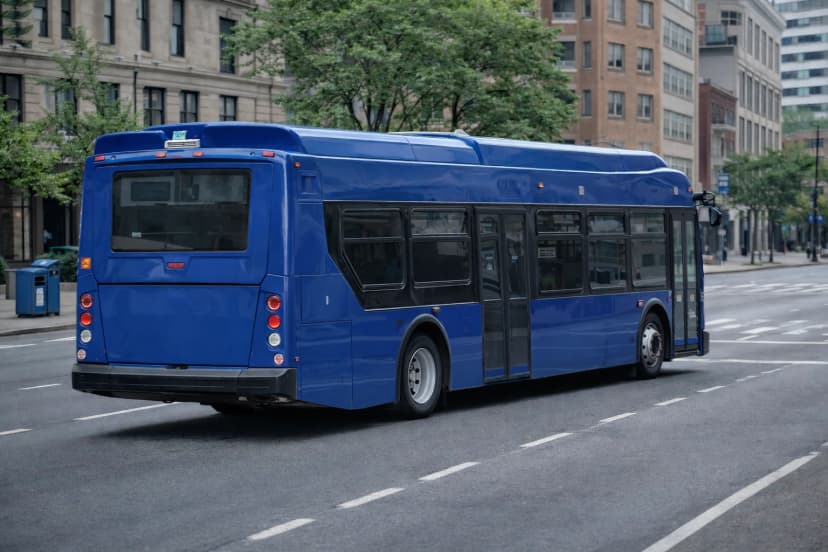
Passenger
6 sections · 123 questions
Required for operating vehicles designed to transport 16 or more passengers. Covers passenger safety, loading, emergency exits, and pre-trip inspection requirements.
Your Path to a Commercial Driver's License
To get a CDL, you must first study for and pass the permit exam at the DMV. After you receive your permit, you can take commercial vehicle driving classes and complete the required training. The final step is passing the official driving exam to earn your CDL. Our practice tests help you prepare for the DMV permit exam with real-style questions, and we also provide extra study materials and helpful resources to guide you through the process.
To obtain a CDL in Pennsylvania, you must pass three written permit tests — General Knowledge, Combination Vehicles, and Air Brakes — at the Pennsylvania Department of Motor Vehicles. Similar to a regular driver's license permit exam, these are timed, multiple-choice tests based on the official Pennsylvania CDL handbook.
All of our practice material is built from the official Pennsylvania CDL handbook and federal resources, and curated by professionals with over 10 years of experience in the commercial transportation industry. Studying with practice tests that mirror the real exam format is one of the most effective ways to pass on your first try.
On this page you'll find free practice tests for all three sections. For the full question bank and additional study features, download the CDL Help app.
CDL Requirements in Pennsylvania
State DMVState DMV49 CFR §391.11
- Must be at least 18 years old to obtain a CDL for intrastate (within Pennsylvania) commercial driving.
- Must be at least 21 years old to operate a commercial motor vehicle in interstate commerce (across state lines) or to transport hazardous materials.
- Drivers under 21 are restricted to driving commercial vehicles within Pennsylvania state borders only.
- Must already possess a valid Pennsylvania non-commercial driver's license before applying for a Commercial Learner's Permit (CLP).
- Must provide proof of U.S. citizenship or lawful permanent status — acceptable documents include a birth certificate, passport, or naturalization papers. Non-U.S. birth certificates are not accepted.
- Must complete a Commercial Learner's application and submit a Self-Certification Form indicating the type of driving planned.
- Must provide residency documents (tax records, lease agreements, mortgage documents, W-2 forms, utility bills, or current licenses) for new applicants or address changes.
- Must meet federal medical examination requirements. As of June 23, 2025, PennDOT implemented the Medical Examiner's Certification Integration final rule, requiring electronic transmission of medical exam results from the National Registry directly to PennDOT.
- Entry Level Driver Training (ELDT) is required for first-time Class A or Class B CDL applicants, upgrades from Class B to Class A, and first-time Passenger (P), School Bus (S), or Hazmat (H) endorsements.
- Must pass all applicable written knowledge tests and skills/drive tests for the CDL class and endorsements sought.
- Must hold a CLP for at least 14 days before taking the CDL skills test.
- New Pennsylvania residents must surrender all valid out-of-state CDLs.
- Hazardous Materials endorsement requires a TSA background check and proof of U.S. citizenship or lawful permanent residence.
Official Pennsylvania CDL Handbook
The official Pennsylvania Commercial Driver's License Manual covers every topic tested on the state's CDL knowledge exam — but its dense, reference-style format makes it difficult for self-study. A more effective preparation tool is our set of General Knowledge practice tests. Our free Pennsylvania CDL permit practice test is structured to closely match the format and content of the official exam and is fully updated as of February 2026. Each test includes 20 questions covering critical topics such as vehicle inspection, safe driving techniques, air brakes, cargo securement, driving emergencies, hazardous conditions, and Pennsylvania-specific commercial driving regulations. Unlike the official test, every practice question comes with a helpful hint and a detailed explanation of the correct answer — so you learn from every question, not just the ones you get right.
- Complete CDL regulations and Pennsylvania-specific requirements
- Safe driving techniques, vehicle inspection, and cargo handling
- All endorsement categories and testing requirements
Non-Domiciled CDL Information
Important information about non-domiciled commercial driver's licenses in Pennsylvania.
Federal regulations on non-domiciled CDLs are changing rapidly. The information below reflects the latest known state actions.
Pennsylvania has paused issuance of non-domiciled CLPs and CDLs — no new non-domiciled credentials can be issued, and transfers, renewals, and upgrades are also suspended. Drivers with existing non-domiciled CDLs may be contacted by PennDOT for re-verification.
Under the FMCSA final rule published on February 13, 2026 (effective March 16, 2026), eligibility for non-domiciled CLPs and CDLs is now restricted to foreign-domiciled individuals holding specific, verifiable employment-based nonimmigrant statuses — specifically H-2A (agricultural workers), H-2B (non-agricultural workers), and E-2 (treaty investors) visa holders. This rule aligns the issuance of non-domiciled CDLs with FMCSA's statutory mandate to ensure the fitness of all CMV drivers, restoring the integrity of the CDL system and enhancing public safety.[FMCSA Final Rule]
English Language Proficiency (ELP)
Federal ELP enforcement applies to all CDL holders nationwide.
Federal ELP enforcement applies to all CDL holders nationwide. Here is how it is enforced in Pennsylvania.
Pennsylvania does not currently administer a separate state-level English Language Proficiency (ELP) test for CDL applicants. However, all Pennsylvania CDL holders are subject to federal ELP enforcement, which took effect on June 25, 2025. Under FMCSA guidance, all roadside inspections must begin in English, and if a driver appears unable to understand or respond appropriately, the officer proceeds with a formal two-step English Proficiency Assessment — a conversational interview in English (no interpreters, translation apps, or other language facilitation tools are permitted), followed by a test on reading and interpreting standard U.S. traffic signs based on the Manual on Uniform Traffic Control Devices (MUTCD). Drivers who fail either step face citation and immediate out-of-service status under CVSA North American Standard Out-of-Service Criteria.