
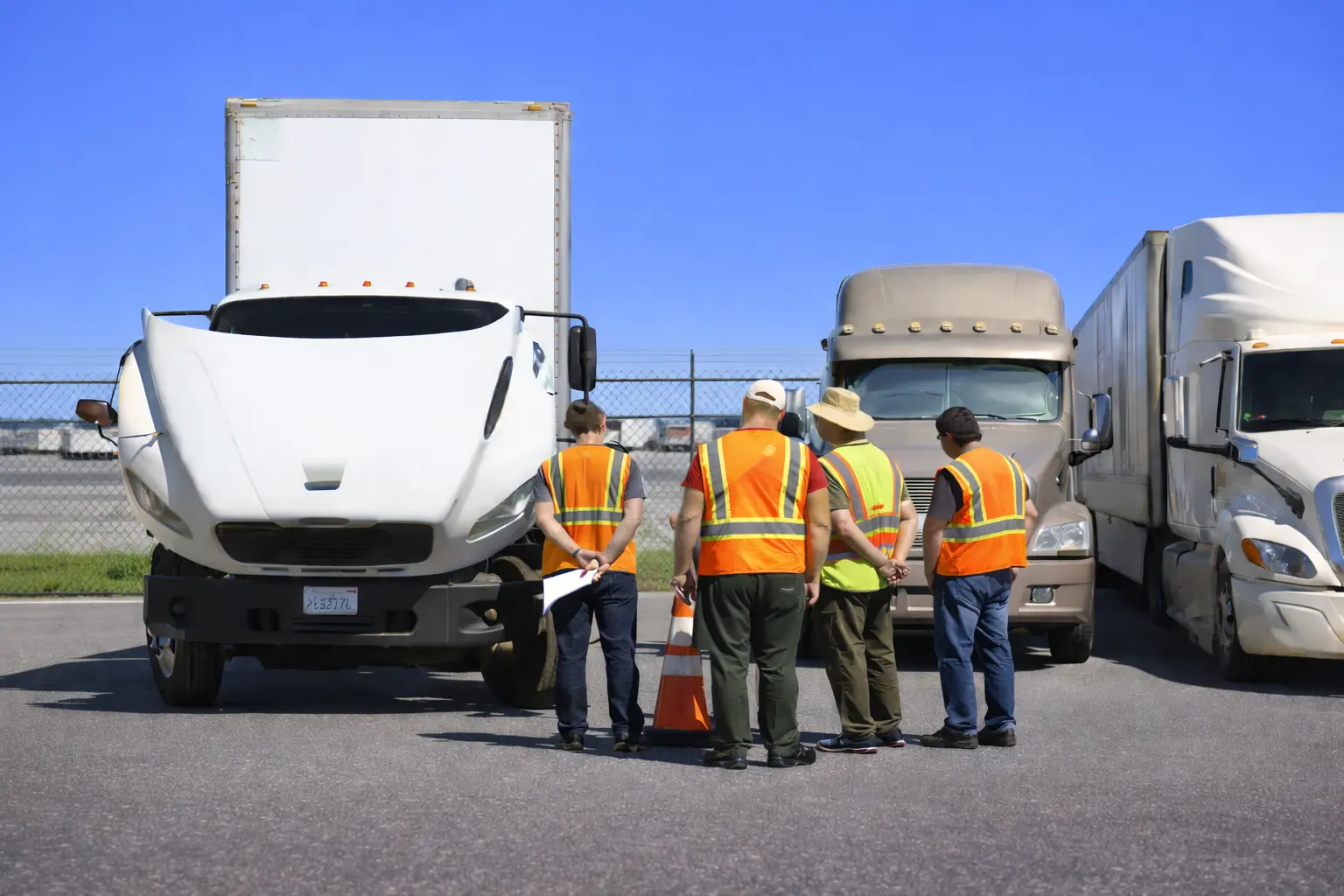
Free Utah CDL Practice Tests — Your Complete Study Guide
Pass your Utah CDL permit exam with 80%+ on the first try
What You Need to Study
General Knowledge
The foundation of your CDL exam. Covers traffic laws, safe driving techniques, vehicle inspection procedures, cargo handling, and federal regulations every commercial driver must understand.
Combination Vehicles
Essential for driving tractor-trailers. Covers coupling and uncoupling procedures, rollover prevention, inspecting combination vehicles, and safely maneuvering with attached trailers.
Air Brakes
Required for any vehicle equipped with air brakes. Covers how air brake systems work, dual air brake systems, inspecting air brakes, and using them safely in all conditions.
Endorsement Tests
HazMat
Required for transporting hazardous materials. Covers placarding, labeling, loading procedures, emergency response, and compliance with federal hazmat regulations.
Tanker
Required for driving tank vehicles used to transport liquids or gases in bulk. Covers safe loading, unloading, and driving techniques specific to tanker operations.
Doubles & Triples
Required for pulling double or triple trailers. Covers coupling and uncoupling multiple trailers, safe driving practices, and inspection procedures for multi-trailer rigs.
Passenger
Required for operating vehicles designed to transport 16 or more passengers. Covers passenger safety, loading, emergency exits, and pre-trip inspection requirements.
What Are You Preparing For?
Select one or more options so we can show you exactly which tests you need to take.
What You Need to Study
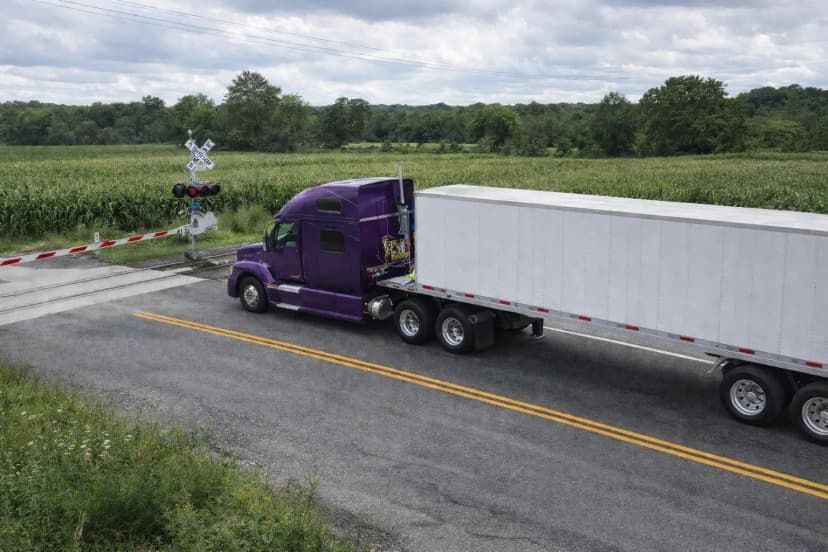
General Knowledge
16 sections · 800 questions
The foundation of your CDL exam. Covers traffic laws, safe driving techniques, vehicle inspection procedures, cargo handling, and federal regulations every commercial driver must understand.
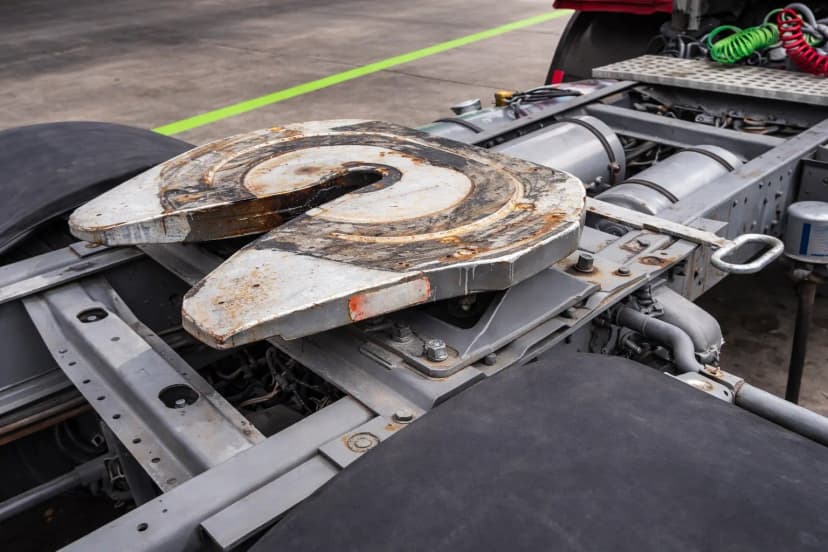
Combination Vehicles
9 sections · 180 questions
Essential for driving tractor-trailers. Covers coupling and uncoupling procedures, rollover prevention, inspecting combination vehicles, and safely maneuvering with attached trailers.
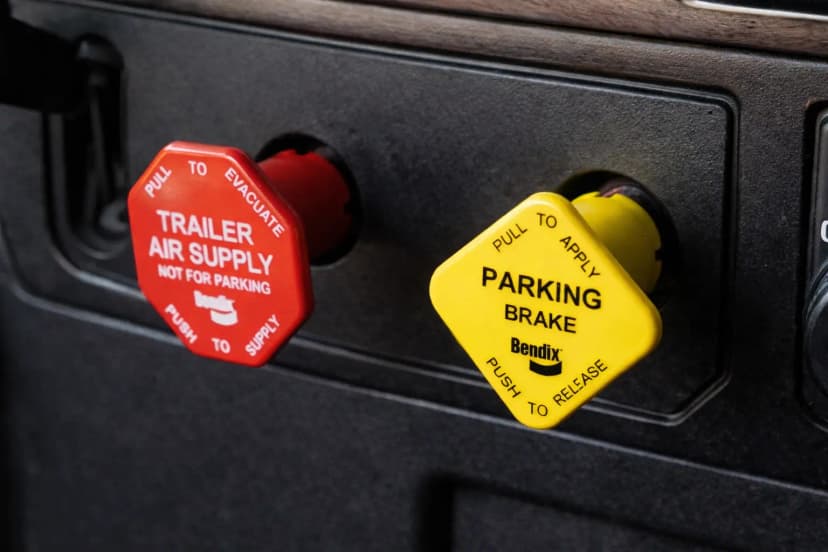
Air Brakes
6 sections · 150 questions
Required for any vehicle equipped with air brakes. Covers how air brake systems work, dual air brake systems, inspecting air brakes, and using them safely in all conditions.
Endorsement Tests
Additional endorsements you may need depending on the type of vehicle or cargo you plan to operate.
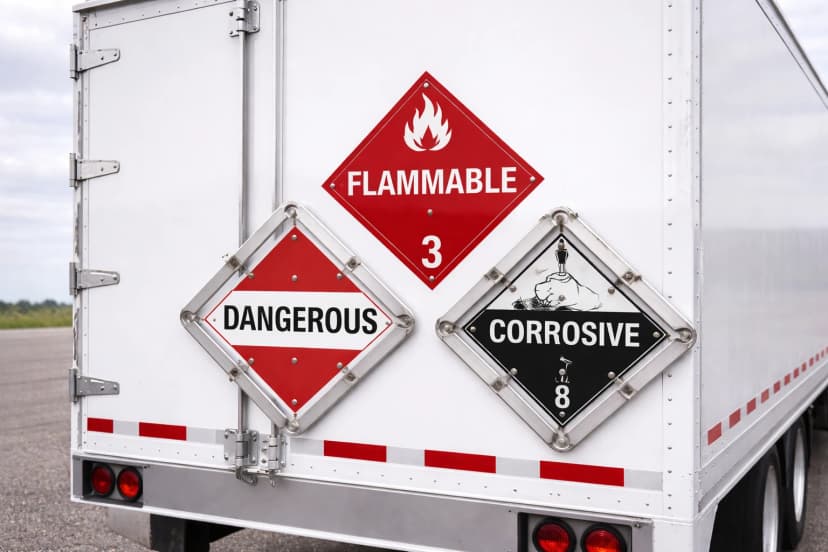
HazMat
9 sections · 202 questions
Required for transporting hazardous materials. Covers placarding, labeling, loading procedures, emergency response, and compliance with federal hazmat regulations.
Tanker
6 sections · 133 questions
Required for driving tank vehicles used to transport liquids or gases in bulk. Covers safe loading, unloading, and driving techniques specific to tanker operations.
Doubles & Triples
7 sections · 144 questions
Required for pulling double or triple trailers. Covers coupling and uncoupling multiple trailers, safe driving practices, and inspection procedures for multi-trailer rigs.
Passenger
6 sections · 123 questions
Required for operating vehicles designed to transport 16 or more passengers. Covers passenger safety, loading, emergency exits, and pre-trip inspection requirements.
Your Path to a Commercial Driver's License
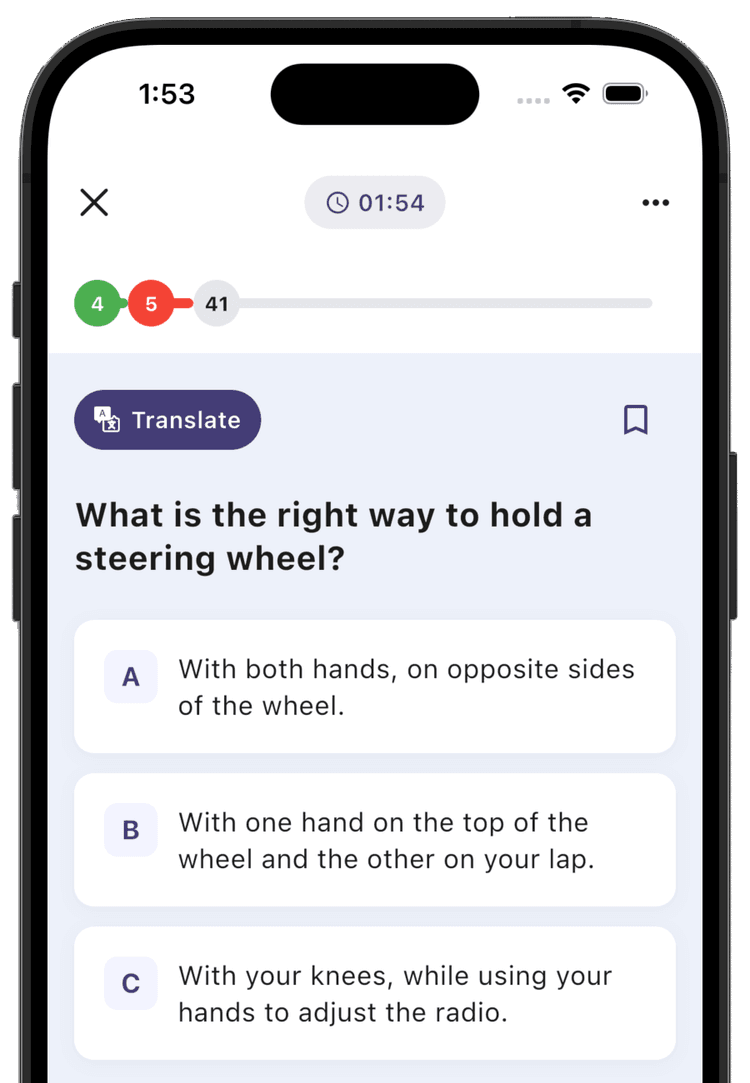
To get a CDL, you must first study for and pass the permit exam at the DMV. After you receive your permit, you can take commercial vehicle driving classes and complete the required training. The final step is passing the official driving exam to earn your CDL. Our practice tests help you prepare for the DMV permit exam with real-style questions, and we also provide extra study materials and helpful resources to guide you through the process.
To obtain a CDL in Utah, you must pass three written permit tests — General Knowledge, Combination Vehicles, and Air Brakes — at the Utah Department of Motor Vehicles. Similar to a regular driver's license permit exam, these are timed, multiple-choice tests based on the official Utah CDL handbook.
All of our practice material is built from the official Utah CDL handbook and federal resources, and curated by professionals with over 10 years of experience in the commercial transportation industry. Studying with practice tests that mirror the real exam format is one of the most effective ways to pass on your first try.
On this page you'll find free practice tests for all three sections. For the full question bank and additional study features, download the CDL Help app.
CDL Requirements in Utah
- To obtain a Commercial Driver License (CDL) in Utah, you must meet the following eligibility requirements:
- Must be at least 18 years old. Must have held a Class D (standard) driver license for at least one year.
- Applicants under 21 are restricted to intrastate (within Utah) operation only and cannot obtain Hazmat (H), Passenger (P), or School Bus (S) endorsements.
- Must provide two documents proving a Utah address. Federal regulations require current Utah address printed on the CDL.
- Must provide proof of U.S. citizenship, lawful permanent residence, or authorized immigration status. Must provide signed Social Security card.
- Must obtain a Medical Examiner's Certificate (MEC) from a certified medical examiner on FMCSA's National Registry. DOT physical valid for up to 24 months.
- CLP issued after passing at least one written knowledge test. CLP valid for 180 days. Must hold CLP for 14 days minimum before skills test.
- ELDT required for first-time Class A or Class B CDL, Class B upgrading to Class A, and first-time S, P, or H endorsements. Theory training can be completed before applying; behind-the-wheel requires CLP first. Not retroactive to those with CDL before February 7, 2022.
- Skills test: pre-trip vehicle inspection, basic control skills, on-road driving. Applicant must bring own registered, road-ready vehicle. May use approved Third-Party Tester.
- CDL Classes: Class A (GCWR 26,001+ lbs, towed unit GVWR 10,001+ lbs), Class B (single vehicle GVWR 26,001+ lbs), Class C (GVWR below 26,001 lbs, carrying 16+ passengers or placarded hazmat).
- Endorsements: H (Hazmat — federal TSA/DOT background check every 5 years), N (Tank Vehicle — 20-question test), T (Doubles/Triples — 20-question test), P (Passenger — 20-question test + skills test), S (School Bus — addition to P endorsement), X (Hazmat + Tank combo).
- Fees: CDL (original or renewal) $52.00 (non-refundable); each endorsement (H, N, T, X) $9.00; Passenger (P) or School Bus (S) $18.00.
- CDL validity: 5 years. Renewal up to 6 months before expiration. If expired more than 6 months, all tests must be retaken.
- Drug and Alcohol Clearinghouse: If FMCSA notifies DLD of prohibited status, CDL will not be issued, renewed, upgraded, or transferred until return-to-duty process is completed.
Official Utah CDL Handbook
The official Utah CDL Handbook covers every topic tested on the state's CDL knowledge exam — but it reads like a dense reference manual, not a structured study guide. A more effective way to prepare is with our General Knowledge practice tests. Our free Utah CDL permit practice test mirrors the format and content of the official exam and is fully up to date as of February 2026. Each practice test features 20 questions covering essential topics such as vehicle inspection, safe driving techniques, air brakes, cargo securement, driving emergencies, hazardous conditions, and Utah-specific commercial driving regulations. Unlike the official test, every practice question comes with a helpful hint and a detailed explanation of the correct answer — so you actually learn from every question you answer.
- Complete CDL regulations and Utah-specific requirements
- Safe driving techniques, vehicle inspection, and cargo handling
- All endorsement categories and testing requirements
Non-Domiciled CDL Information
Important information about non-domiciled commercial driver's licenses in Utah.
Federal regulations on non-domiciled CDLs are changing rapidly. The information below reflects the latest known state actions.
Utah has a dedicated non-domiciled CDL program. A Non-Domiciled CDL is issued by Utah to a lawful immigrant whose domicile (home country) does not issue CDLs meeting federal standards. Eligible applicants must present an I-94 admittance document showing one of these visa types: H-2A, H-2B, or E-2, along with an unexpired foreign passport as proof of identity. Citizens of Canada and Mexico are NOT eligible (their countries issue CDL equivalents), nor are DACA recipients, asylum seekers, asylees, or refugees. Non-domiciled CDLs expire on the "admit until" date on the I-94 or one year, whichever is sooner — they cannot exceed one year. Renewal is available up to 6 months before expiration but must be done in person (online renewal not available). The completed license is mailed in approximately 4-6 weeks. Utah's program aligns with the FMCSA final rule published on February 13, 2026.[dld][dld][FMCSA Final Rule]
English Language Proficiency (ELP)
Federal ELP enforcement applies to all CDL holders nationwide.
Federal ELP enforcement applies to all CDL holders nationwide. Here is how it is enforced in Utah.
Utah does not currently administer a separate state-level English Language Proficiency (ELP) test for CDL applicants. However, all Utah CDL holders are subject to federal ELP enforcement, which took effect on June 25, 2025. Under this enforcement, roadside inspectors conduct a two-step assessment: first, a conversational interview in English — no interpreters or translation tools are permitted — to evaluate whether the driver can communicate sufficiently in English; second, the driver must demonstrate the ability to read and interpret standard U.S. traffic signs. Drivers who fail either step of the assessment are placed out of service under CVSA guidelines. Utah CDL applicants should be prepared to demonstrate English proficiency during any roadside inspection or compliance review.