The Tennessee Department of Transportation (TDOT) has chosen Cavnue, LLC as a private partner for the Memphis/West Tennessee Smart Freight Corridor pilot project on I-40 between Memphis and Blue Oval City. TDOT announced the contractor selection on March 27; the project is positioned as the state's first specialized initiative for a 'smart' freight corridor and is planned to span several years, including phases of planning, design, temporary infrastructure deployment, road testing, and subsequent performance evaluation until 2028, with up to one year of measurement and analysis after road launch (TDOT announcement).
TDOT links the pilot to practical testing of Connected and Autonomous Vehicle (CAV) technologies in real traffic and freight conditions. The project description emphasizes three goals: enhancing safety, reducing congestion, and advancing freight technologies on one of the state's busiest and economically significant routes. The official release specifically mentions the management model: the road, data, and decisions on further steps remain under state control, while the private company provides engineering, temporary technological equipment, and measurable evaluation of results.
Governor Bill Lee, in a statement provided by TDOT, connected the pilot to the development of the transportation network and support for economic growth in West Tennessee, emphasizing that the corridor is among the key freight routes and requires modernization as business needs change (TDOT). TDOT Commissioner Will Reid (P.E.) called the project 'an investment in the future' and a step towards preparing infrastructure for the next generation of freight mobility—a formulation that, in the context of the release, directly relates to testing and measuring the effects of CAV-oriented solutions.
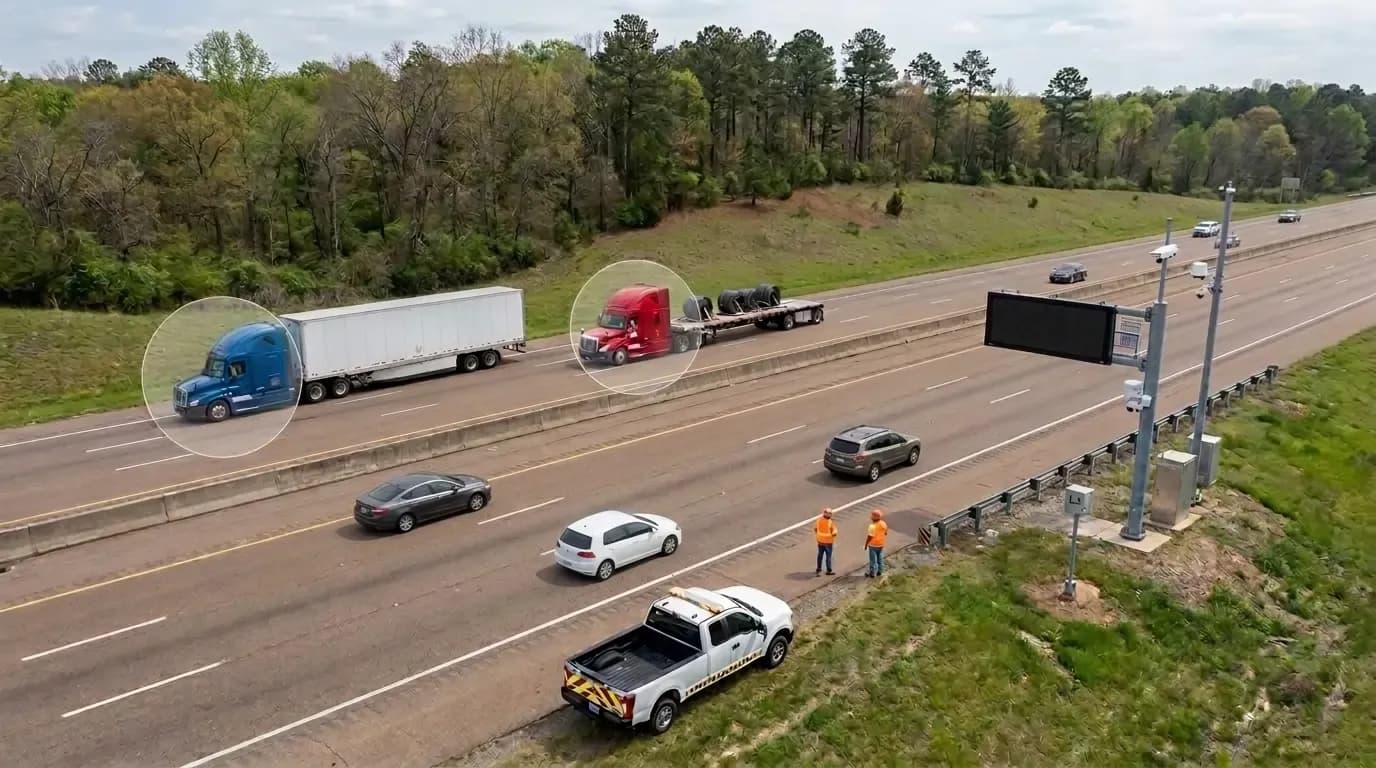
Cavnue's role in the pilot is described in detail. The company is to conduct an analysis of the corridor and infrastructure, prepare a concept of operations and design the pilot system, then install temporary roadside and onboard technological components, organize real-time data collection on freight and general traffic, and perform an evaluation—from system performance metrics and safety impact to operational effects. The release specifically mentions stakeholder engagement, which for such projects usually means coordination with local authorities, law enforcement, road maintenance services, and traffic participants involved in the tests (TDOT).
Funding and the scope of the 'first phase' of the project are outlined in documents related to the approval of further development. The Tennessee Transportation Modernization Board materials indicate that approximately $5 million in one-time state funding is allocated to support the pilot in fiscal year 2026. The same document package notes the expectation that the partner will develop revenue models based on user fees for potential subsequent implementation phases if the state decides to scale the solutions after pilot completion and result evaluation (TMB document). TDOT emphasizes in public communication that decisions about the future remain with the state—meaning user-fee models are described at this stage as a direction for exploration, not an approved mechanism.
Stay Updated with Industry News
Subscribe to our newsletter and get the latest trucking industry news, regulations updates, and career tips delivered to your inbox.
We respect your privacy. Unsubscribe at any time.
The pilot's geography—from Memphis to Blue Oval City—is directly linked to the region's increasing industrial load. Blue Oval City is an industrial cluster in Haywood County (Stanton), where Ford's $5.6 billion project is being implemented: a 4,100-acre campus (about 6 square miles) for electric vehicle and battery production. A related publication on access infrastructure to the site also discusses the scale of employment—around 6,000 jobs in the Stanton area, which implies a significant increase in trips by personnel, contractors, and material and component deliveries (Michigan Contractor News).
Traffic growth is well illustrated by estimates for SR 222—one of the roads providing connectivity in the Blue Oval City area. According to the same publication, before the project's activity began, the average daily traffic (ADT) was estimated at 7,740 vehicles per day, with trucks accounting for about 10%. Considering the flows associated with Blue Oval City, the 2025 estimate is 10,860 vehicles per day, with the share of freight transport around 22%. In the longer term (2045), the estimate is 16,740 vehicles per day (Michigan Contractor News). These figures do not pertain to I-40 but to a regional connecting road, yet they illustrate why TDOT in its release speaks of expected freight flow growth and the need to test new traffic management and safety tools on a key highway corridor.
Alongside the technological pilot, 'traditional' construction continues to improve access to the industrial hub. Infrastructure work descriptions around Blue Oval City mention SR 222 upgrades in Haywood and Fayette counties, with completion expected by late 2025—spring 2026 (Michigan Contractor News). A separate project involves Interstate 40 / State Route 194, which includes a new interchange and access road to the Blue Oval City site—it appears in the federal permitting process system as a DOT project linked to I-40 and SR-194 (Permitting Dashboard). For operators working in the Memphis-east corridor, this means two different processes are unfolding simultaneously in the region: road improvements for physical access to the industrial zone and a pilot for digital/connected technologies on the highway.
Cavnue is publicly known as a developer of 'smart' corridor solutions, and the company already has a parallel project in Texas—on SH 130, which it calls the first Smart Freight Corridor in the country; there, according to Cavnue, the deployment of an initial 4-mile section in a proof of concept format began in November 2024 (Cavnue project description). TDOT does not directly compare the Tennessee pilot with the Texas one in its announcement, but having an active implementation by the chosen partner on another route provides a clear context: in Tennessee, it is not about theoretical development but transferring and testing approaches on a specific corridor with different traffic conditions, flow configurations, and freight operation structures.
According to the schedule published by TDOT, in the coming months after the contractor selection announcement, Cavnue should begin planning and design under the department's supervision. The start of temporary road testing is tied to TDOT approval—dates are not specified in the release; the same applies to the start and end of the one-year evaluation period, which is included within the overall 'until 2028' window (TDOT). The department also promised to release updates as planning and design stages progress, but at the time of publication, only basic frameworks, partner work scope, and target measurement areas—safety, capacity/congestion, and operational effects of CAV technologies in real I-40 corridor conditions—are announced.