
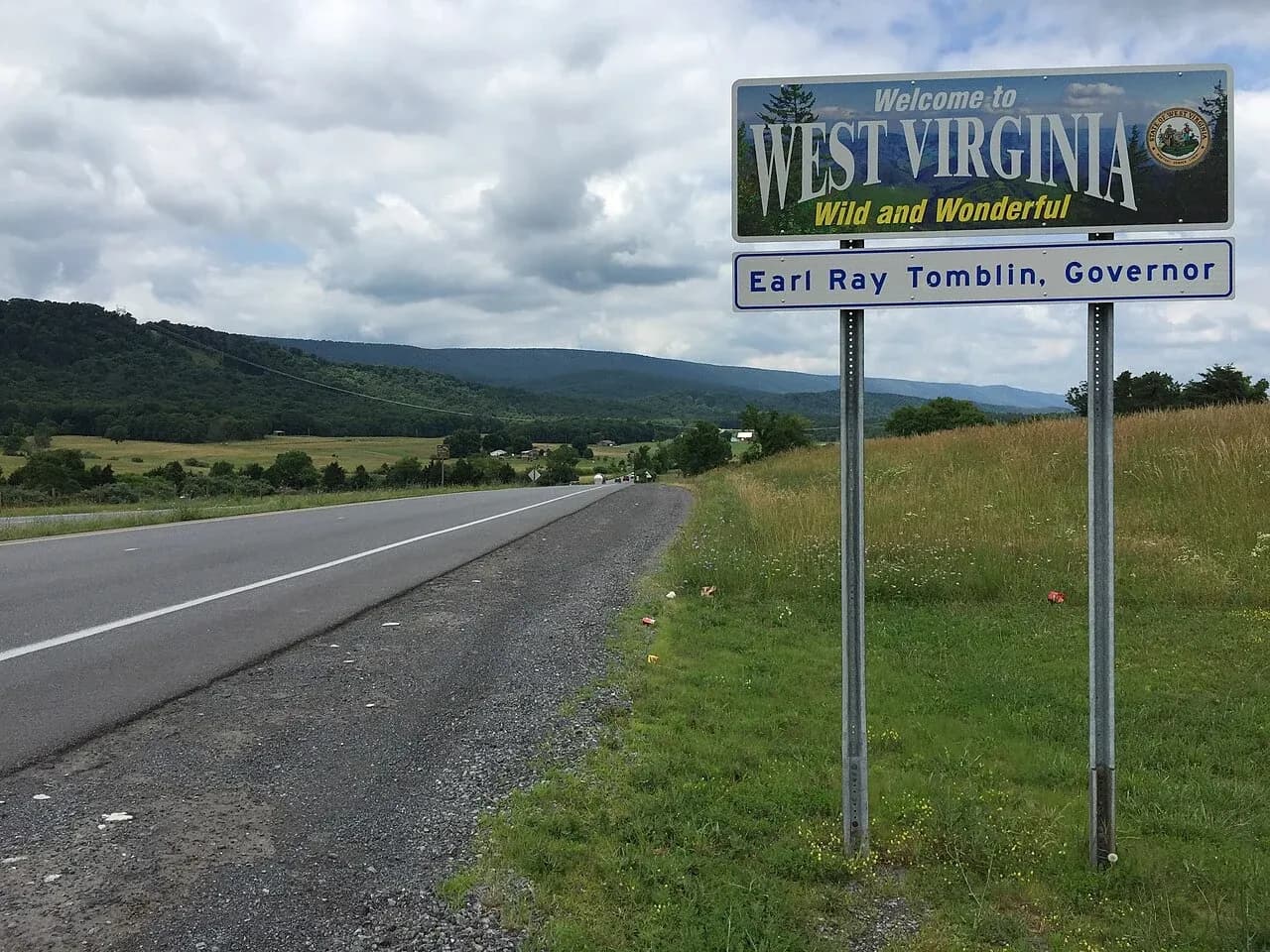
A bill in the West Virginia legislature could significantly change entry rules for some CDL candidates. House Bill 4441 (HB 4441) proposes requiring all CDL applicants in the state to demonstrate English reading and writing skills. While formally presented as a safety measure, the industry views it more broadly: as a signal of a possible shift towards a stricter model for commercial vehicle operation and more demanding enforcement practices after severe accidents.
The catalyst was a 2025 tragedy near Cheat Lake: Kevin Letaille died in a crash involving a tractor-trailer. According to the family's attorney Dino Colombo (Colombo Law), the legal outcome was a "misdemeanor level" — the tractor-trailer driver Sukhjinder Singh received one year in prison, the maximum for the charged misdemeanor. The contrast between the severity of the consequences and the lenient, from the family's perspective, classification of the incident sparked public debate: what exactly should the state require from a driver before issuing a CDL and what should sanctions look like after a fatal accident.
HB 4441 was introduced on January 16, 2026, by Delegates Sheedy, Willis, and Cooper. The document was sent to the Government Organization Committee. According to the description provided, the rule is intended for the future: it concerns new applicants, without retroactively revising the status of current CDL holders. For carriers, this is a crucial detail: the risk of a sudden drop in the current driver pool is minimal, but the "entry funnel" — recruitment and training — changes.
The essence of the proposal is to make English literacy (reading and writing) a mandatory condition for obtaining a CDL in West Virginia. In public arguments by supporters, it is about the basic ability to understand road signs, instructions, safety requirements, and interact with regulatory authorities. For fleet operators, this means potentially stricter verification of what could previously be overlooked with a "sufficient conversational level" or translation by a training center.
At the operational level, carriers working in the state or hiring drivers domiciled in WV need to understand: even if the bill does not affect existing licenses, it can change the timing and cost of candidate preparation. Training centers will have to design programs not only to "coach" for the test but also to document compliance with the reading and writing requirement. For HR and safety departments, this adds a new layer of compliance: language level verification becomes not a "desirable practice" but a legally significant filter.
Stay Updated with Industry News
Subscribe to our newsletter and get the latest trucking industry news, regulations updates, and career tips delivered to your inbox.
We respect your privacy. Unsubscribe at any time.
A separate issue is the risk of contentious situations. A driver may speak English confidently but write with errors; may read technical text but struggle with forms. If the bill is passed with the "read and write" formulation, carriers will need to prepare for increased refusals at the CDL issuance stage and for repeated test attempts, which will prolong vacancy closures. This occurs against the backdrop of an already tense driver labor market, where any administrative barriers quickly become a capacity and service issue.
Although HB 4441 focuses on licensing, the discussion has not been limited to language. Attorney Dino Colombo publicly linked safety with how the state classifies and penalizes fatal CMV accidents: if a tragedy ends with a "simple" misdemeanor and a year in prison, the family believes it does not create a sufficient deterrent effect.
For the industry, this line is important not so much emotionally as for potential insurance and legal risks. When political pressure rises in a region due to a high-profile case, usually more than one point changes. Proposals may follow to increase criminal liability, expand grounds for CDL revocation, raise training requirements, and qualification checks. Even if HB 4441 passes "alone," the discussion itself pushes courts, prosecutors, and regulators towards a stricter perspective in investigating severe CMV accidents.
For carriers, this could mean rising liability insurance costs, more aggressive plaintiff positions in civil suits, and increased attention to documentation: who trained the driver, how skill checks were recorded, how pre-employment and ongoing monitoring procedures were performed. In such an environment, "language proficiency" easily turns from a formal point into an element that courts may interpret as an indicator of employer diligence.
West Virginia is not acting in a vacuum. At the federal level, President Donald Trump publicly urged Congress in early March to pass an initiative known as "Dalilah’s Law." In the public interpretation accompanying the discussion, the measure aims to restrict CDL issuance to individuals without legal status, effectively strengthening the immigration filter through licensing mechanisms.
Simultaneously, the industry is discussing another direction — tightening federal control over so-called non-domiciled CDL (licenses for drivers not domiciled in a specific state), where increased enforcement, according to some market participants, could affect up to 200,000 drivers and provoke capacity contraction. Analysts are divided: some expect a noticeable reduction in "non-compliant" capacity and accelerated spot rate growth, while others see the effect as limited. Practically, for carriers, this means one thing: 2026 could be marked by increased checks on the legality and quality of documents, including training, statuses, and compliance.
In this context, HB 4441 appears as part of a broader trend: states are trying to add their own filters to driver admission, especially if there is a high-profile case and political support. For companies used to planning recruitment "by geography," this adds uncertainty: different states may impose different additional criteria on top of the federal basis.
In the discussion of HB 4441, an assessment is mentioned: a 2023 study allegedly showed that about 3.8% of CDL drivers have limited English proficiency. This figure seems moderate, but in absolute terms, even a few percent of a large driver base means thousands of people, and for a specific state and especially for certain segments (port logistics, interstate corridors, contracts with active immigrant hiring), the share may be higher.
The problem is that such assessments almost always spark methodological debate: what is considered "limited proficiency," how it was measured, and how much the indicator correlates with accident rates. Opponents of tightening usually insist that language is just one factor, and key influences are experience, company safety culture, work and rest regimes, and training quality. Supporters respond that language is a basic layer without which other elements do not work: you cannot properly follow instructions if you have not read them, and you cannot communicate correctly during inspections or accidents.
Details of the discussion and the position of the deceased's family attorney are published in a local TV channel's material WDTV.