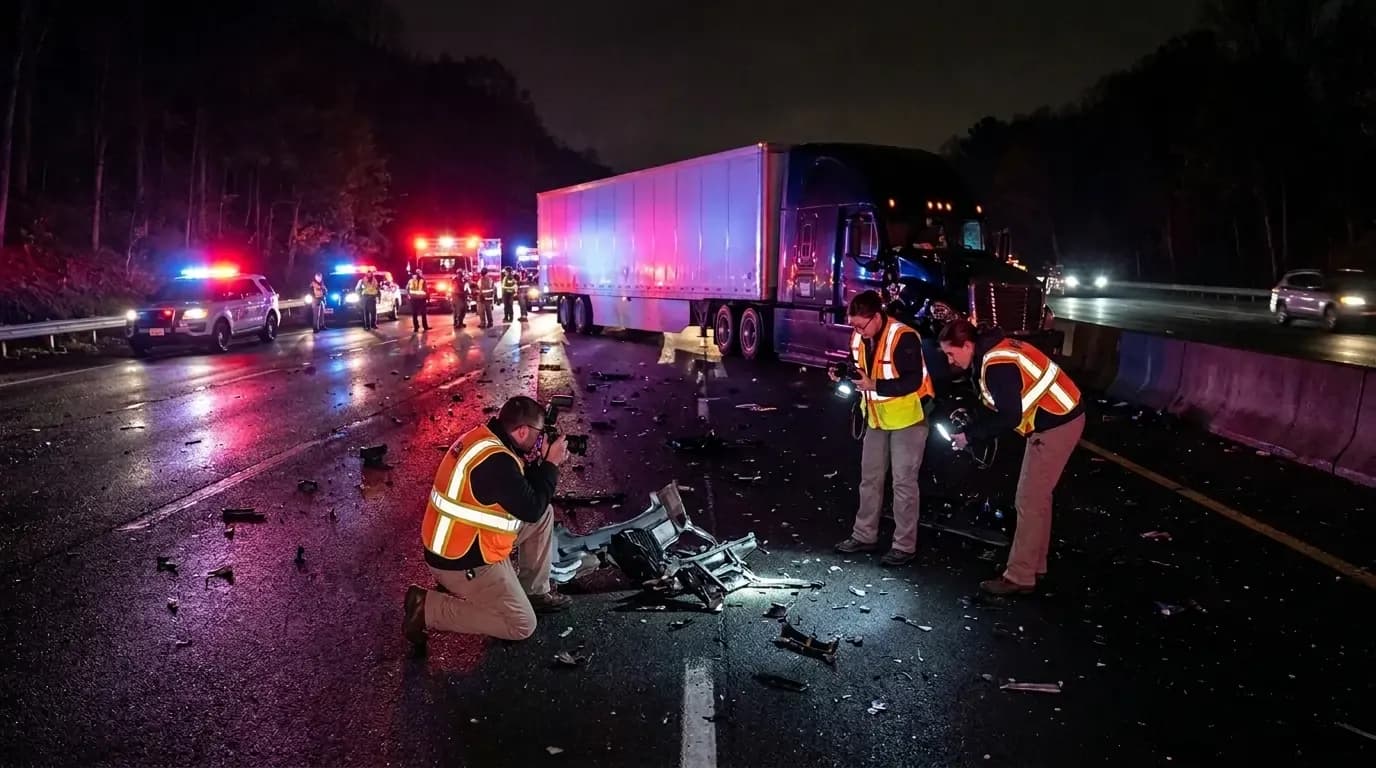
In 2023, 5,472 people died in crashes involving heavy trucks — 8% less than the previous year, according to NHTSA data analyzed by industry sources. The number remains high: based on the total number of road fatalities (40,901 people), the share of deaths in crashes involving large trucks is about 13.4%. NHTSA notes a general decline in road fatalities in 2023 in its early estimates, indicating a decrease compared to 2022 (NHTSA release on early 2023 estimates).
Different statistical sets provide different "final" values for fatalities in large truck crashes, which is important to consider when comparing publications. For instance, IIHS on its "Fatality Facts" page for large trucks reports 4,354 fatalities in 2023 — significantly fewer than the 5,472 in materials based on NHTSA datasets (IIHS — Large trucks). The discrepancy is due to counting methods and samples (e.g., the definition of "large truck" and the databases used), so professional discussions usually specify the source and dataset before drawing conclusions about trends.
In practical terms, the 2023 statistics again show a risk structure familiar from past periods: most fatalities in heavy truck crashes are not truck drivers. The National Safety Council in its Injury Facts notes that about 70% of fatalities are occupants of other vehicles, 18% are people in the truck itself, and another 12% are "non-occupants" (pedestrians, etc.) (NSC Injury Facts — Large trucks). IIHS provides a similar picture and specifies the composition: 65% of fatalities are in passenger vehicles, 16% are truck occupants, and 17% are pedestrians/bicyclists and other non-occupants (IIHS — Large trucks).
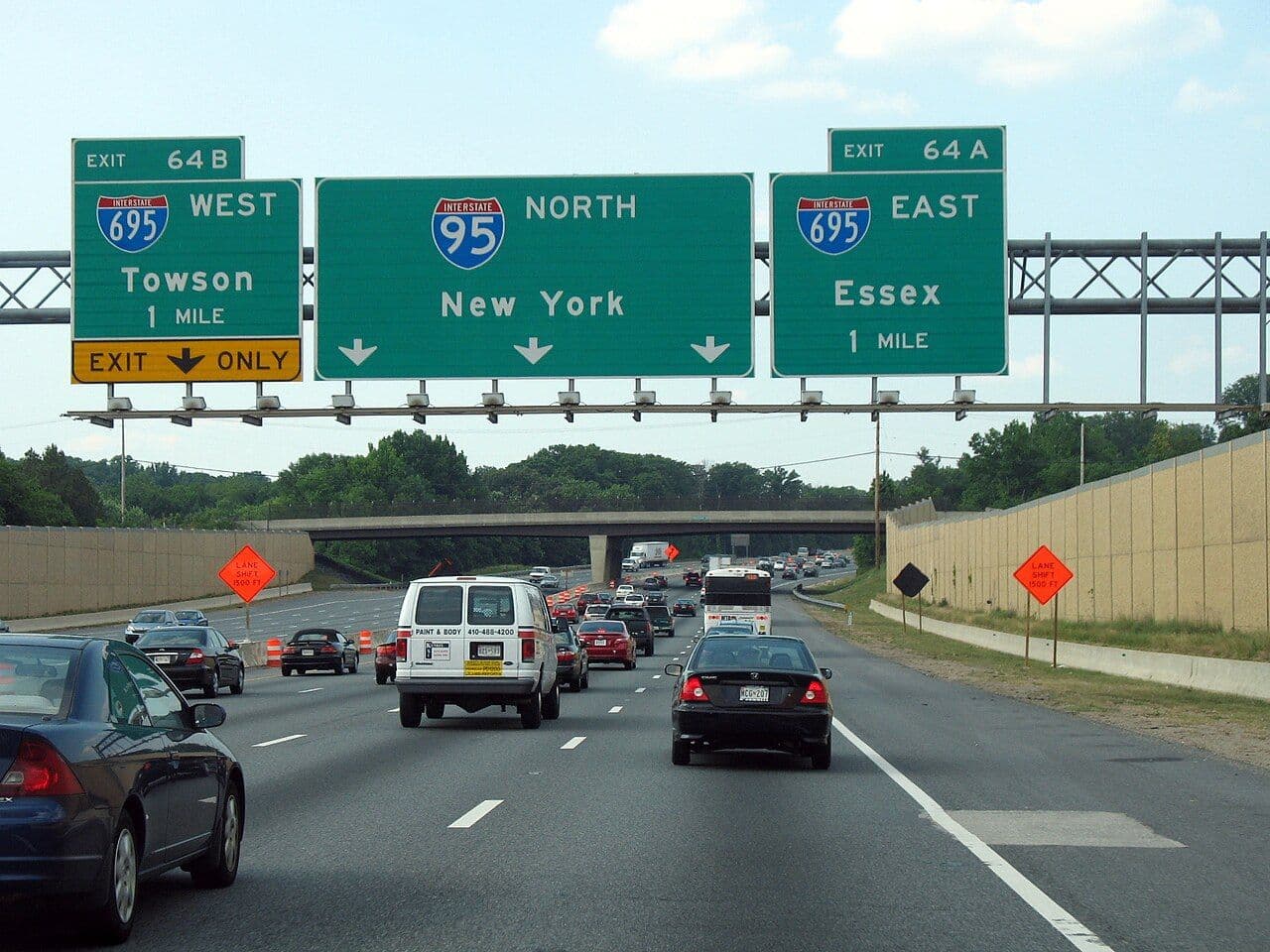
Looking at the "hardware," IIHS divides fatalities by type: tractor-trailers account for 3,190 fatalities (73%), and single-unit trucks for 1,169 (27%) (IIHS — Large trucks). By road type, the distribution is not limited to interstates: 34% of deaths occur on interstates, 51% on other major roads, and 15% on minor roads (IIHS — Large trucks). NHTSA data highlights the geography by area type: 55% of fatal large truck crashes occur in rural areas, affecting emergency response times, collision nature, and scenarios of departure/crossing maneuvers; this is also noted in a federal statistics analysis (FreightWaves article analyzing NHTSA data).
Public discussions of crash circumstances often skew toward politicized topics — particularly discussions about driver status and CDL format. However, the federal reporting framework lacks fields to confidently link crash rates to citizenship, immigration status, or "non-domiciled" categories in crash records. This limitation is highlighted in industry analysis: crash reporting systems and FMCSA datasets do not provide a verifiable basis to statistically prove or disprove claims about the "dominant" influence of non-domiciled CDL on fatalities (discussion of data limitations).
Stay Updated with Industry News
Subscribe to our newsletter and get the latest trucking industry news, regulations updates, and career tips delivered to your inbox.
We respect your privacy. Unsubscribe at any time.
Against this backdrop, more "grounded" discussions rely on causality research results and measurable factors. An industry article referencing the Large Truck Crash Causation Study (LTCCS) states that the "critical reason" in the vast majority of cases is related to driver actions or inactions — 88% of cases, with speed, fatigue, and inattention/distraction regularly cited as typical factors (LTCCS and federal statistics analysis). This article also highlights the technical aspect: according to LTCCS data, 55% of trucks involved in crashes had at least one mechanical violation, and 30% had out-of-service level defects; brakes were the most common problem category (same source).
NHTSA statistics on driver characteristics involved in fatal crashes also contain details that do not align well with popular simplifications. In 2023, the share of large truck drivers in fatal crashes with BAC ≥ 0.08 is 4% — significantly lower than passenger cars (24%), light trucks (20%), and motorcycles (26%), according to NHTSA data analysis (federal statistics analysis). The same data shows noticeable shares of large truck drivers involved in fatal crashes with prior crashes (19.4%) and previous speeding violations (17.3%), while the share with a history of license suspension/revocation (6.4%) is lower than other driver categories in the comparison (same source).
Additional context for 2023 is provided by publications that compile NHTSA figures into a longer series. A review on truckaccidents.com emphasizes that despite the annual decrease in 2023, the long-term trend remains unfavorable: according to their data retelling, since 2009, the number of fatalities in large truck crashes has increased from 2,896 to 5,472 (+87.4%) (truckaccidents.com on 2023 NHTSA data). The same source provides the structure of fatal crashes by the number of participants: 60.7% are two-vehicle collisions, 17% involve three or more vehicles (same source). NSC in its Injury Facts dataset formulates a similar thought differently: despite an 8% decrease in 2023, over ten years, the fatality rate in large truck crashes has increased by about 40% (NSC Injury Facts — Large trucks).
A crucial part of the safety discussion remains the quality of access and control, but public statements also face observability limitations. An industry article analyzing data and the debate around "non-domiciled CDL" notes that federal databases do not contain indicators to reliably "pin" crash rates to immigration categories. The article describes arguments from DOT leadership about "emergency restrictions" on non-domiciled CDL, providing an approximate comparison: five fatal crashes identified as related to non-domiciled CDL against about 1,600 fatal "truck" crashes over a comparable period discussed in the article (source with this assessment and data caveats). The text emphasizes that without direct fields in reporting, any "shares" remain subject to methodological caveats, not formal statistics.
At the federal road fatality level, 2023 marked the second consecutive year of decline after peak values at the beginning of the decade. NHTSA's early estimates release indicates 40,990 road fatalities in 2023 compared to 42,514 in 2022 (a 3.6% decrease) (NHTSA — 2023 early estimates). In an earlier interim estimate for the first half of 2023, NHTSA reported 19,515 fatalities and noted changes by road user categories, including heavy vehicles, but without detailed "truck" breakdowns, which later appear in specialized fact sheets and derivative publications (NHTSA — Q2 2023 fatality estimates).
Alongside the overall mortality statistics in 2023, NSC notes that 5,375 large trucks were involved in fatal crashes (an 8.4% decrease) (NSC Injury Facts — Large trucks). Another retelling of NHTSA data notes a decrease in fatalities among truck occupants: down 12% year-over-year, or 137 fewer people than in 2022 (YourLawyer.com on NHTSA data). These details are important for companies that separate internal metrics for driver risks and third-party risks, but in public reporting, they are often mixed under the general heading "truck-related."
Ultimately, the 2023 data set simultaneously records a year-over-year decrease and maintains a strict framework for causes that are easiest to confirm with measurements: driver behavior, compliance with regulations, and technical condition, especially regarding braking systems. However, the most prominent theories about the link between fatal crashes and driver license categories remain poorly verifiable at the federal database level, as acknowledged in materials based on available statistics and methodology analysis (detailed analysis of data and causality).