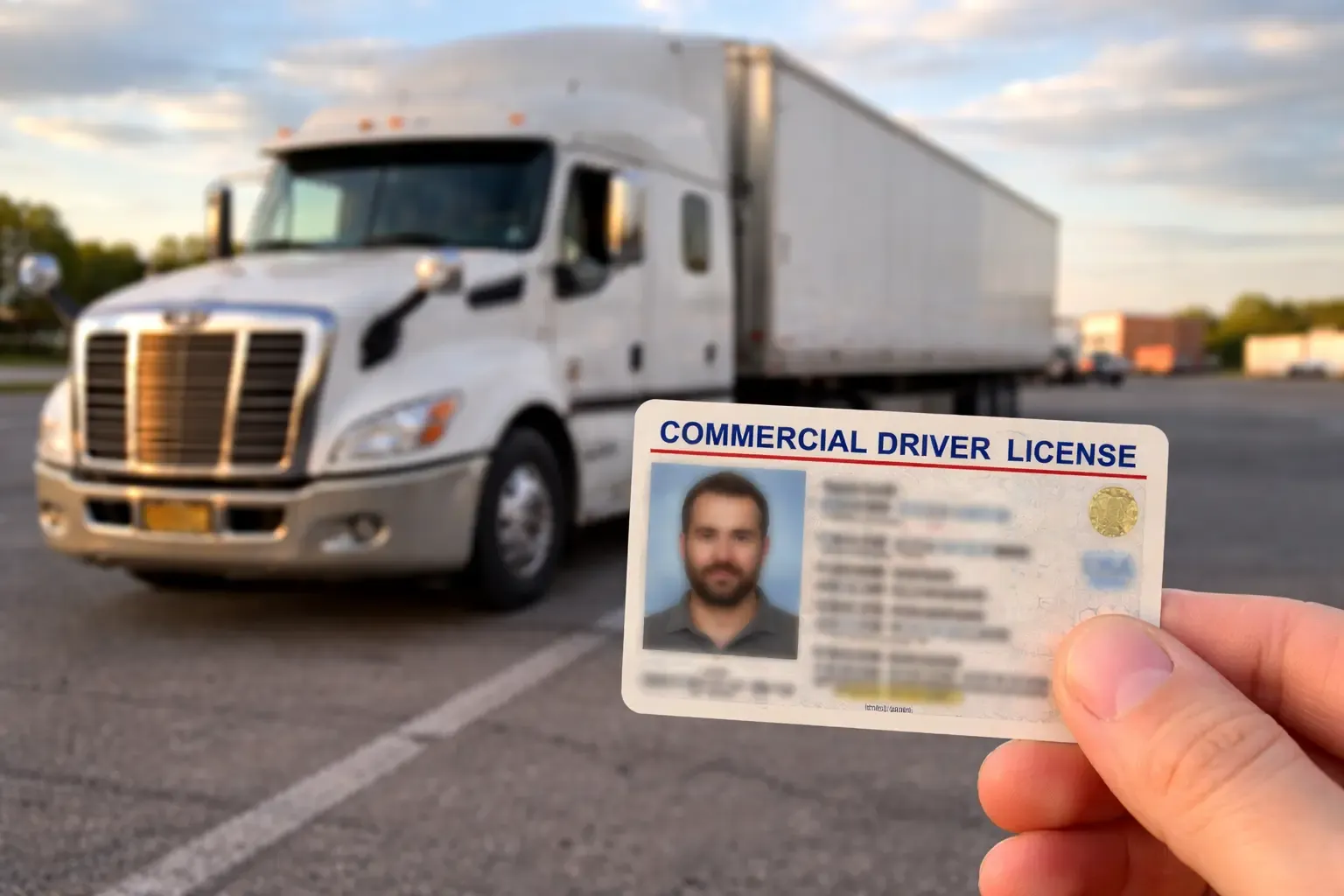
The California DMV has yet to restore any commercial driver's license (CDL) revoked from non-domiciled drivers following a federal mandate to cancel licenses issued with validity dates not matching work permit terms. An estimated 13,000 drivers have had their CDLs revoked since March 6. Court documents and public statements describe the situation as a legal and administrative deadlock: the agency is accepting new applications and must act within a 'reasonable time,' but warns that processing could take up to a year—and even then, a decision may not be reached due to ongoing federal pressure and litigation. These details are reported by CalMatters, and the DMV directly links the cancellations to a federal mandate and FMCSA's stance in an official statement on its website: «Federal government requires California DMV to cancel certain nondomiciled drivers licenses».
The scheme has also affected asylum seekers and DACA recipients, who are allowed to live and work but do not have permanent resident status. According to CBS News Sacramento, about 20,000 people initially received notifications, with actual cancellations affecting around 13,000 by March 6. Some drivers not immediately affected faced another restriction: their documents could remain valid until expiration, but could not be renewed under previous rules.
A key point of conflict is the CDL validity period. Federal regulators stated that the state issued non-domiciled CDLs with expiration dates not tied to immigration documents/work permits. The DMV claims it tried to correct this by issuing 'adjusted' CDLs but was blocked by federal oversight. An official DMV release states that the D.C. Circuit Court of Appeals denied the state's emergency request to suspend the federal stance; simultaneously, drivers were offered regular Class C licenses for passenger vehicles and light trucks instead of commercial documents (DMV).
The Alameda County court intervened in the process, ordering the DMV to provide drivers the opportunity to regain work rights through new applications and their processing in 'reasonable time.' DMV spokesperson Jonathan Groveman confirms in CalMatters that the agency is accepting such applications under the court order. However, at an April 2 hearing, the DMV informed the court that no canceled CDLs had been reissued, and the process could extend up to 12 months. KQED describes the judge's position as 'supervisory': the next discussion is set for October 20, with the judge publicly expressing hope that the 'temporary pause' will end and the DMV can align its actions with requirements.
Meanwhile, in the public sphere, the DMV and journalistic investigations place different emphases on the causes of the crisis. In KQED's version, part of the story is presented as a consequence of an administrative error with expiration dates, which then became the object of federal enforcement. In CalMatters's account, the conflict is broader and directly linked to a tightening federal approach to issuing commercial licenses to certain non-citizen categories, including threats of financial and regulatory sanctions against the state.
Stay Updated with Industry News
Subscribe to our newsletter and get the latest trucking industry news, regulations updates, and career tips delivered to your inbox.
We respect your privacy. Unsubscribe at any time.
The financial leverage has already been activated. According to CalMatters and CBS News Sacramento, federal authorities have linked the situation to withholding about $160 million in road funding. CalMatters also mentions a harsher threat—to question the state's authority to administer CDLs altogether if it acts contrary to the federal line. In response, California filed a lawsuit against USDOT, as reported by CalMatters in the context of February events; but the presence of parallel processes, including proceedings in Washington, has become one reason why the DMV explains delays by legal uncertainty.
At the company level, the consequences are not abstract numbers but direct staffing failures. KQED provides an example of Roadies Inc. from Bakersfield: according to the company, about 100 out of approximately 300 drivers are affected. For dispatching and planning, this means not a 'gradual outflow,' but a simultaneous drop in people from schedules—since March 6, when the cancellations took effect.
For the drivers themselves, the story boils down to losing the right to drive commercial vehicles 'on one date' with no clear horizon for return. CalMatters describes the case of a driver from the Bay Area, named 'Singh' (name withheld due to immigration concerns): his CDL was annulled on March 6, after which he received temporary non-commercial digital licenses without a photo, which, he says, employers and contractors do not always accept as a full document. He also described the economics of his work as an independent contractor: before the CDL cancellation, his income was about $11,000–$16,000 a month; the truck was purchased for $160,000, with a monthly loan payment of about $3,000, and insurance costing another approximately $1,500. According to him, the bank refused a deferral, while an employee mentioned that similar requests are coming in en masse from other drivers in similar situations.
The DMV's official position remains ambiguous: the state emphasizes that the cancellations are dictated by federal requirements and resistance leads to sanctions, but also publicly criticizes the federal line as politically motivated. In a quote from DMV Director Steve Gordon in the agency's release, federal actions are called part of an 'immigration war,' which, he says, removes 'qualified, hardworking commercial drivers' from the roads, who comply with language and safety requirements (DMV). In parallel reports on court oversight, the DMV continues to refer to the need to act within federal constraints while also complying with the state court's order to accept applications and process them in 'reasonable time' (CalMatters, KQED).
The legal part of the conflict is developing on several tracks. At the end of December, a complaint/lawsuit was filed with the support of civil rights organizations, including the Asian Law Caucus and Sikh Coalition; in February, the Alameda County court ordered the DMV to ensure the possibility of restoration; on April 2, the court revisited the issue and scheduled another discussion for October, awaiting clarification on the federal front (CalMatters, KQED). Even in journalistic materials, assessments of the potential further scope differ: CalMatters writes that tens of thousands of CDL holders in the state could be at risk in the future, estimating a share of 5–10% of the total number of licenses; CBS notes a narrower 'first wave' of notifications and actual cancellations (CalMatters, CBS News Sacramento).
For now, the practical result for the state's labor market is measured by a simple metric: licenses for 13,000 drivers have been canceled since March 6, restored CDLs—zero, and the official processing time for applications is stated by the DMV as 'up to a year,' without guaranteeing that a decision will be made even after this period (CalMatters, DMV).