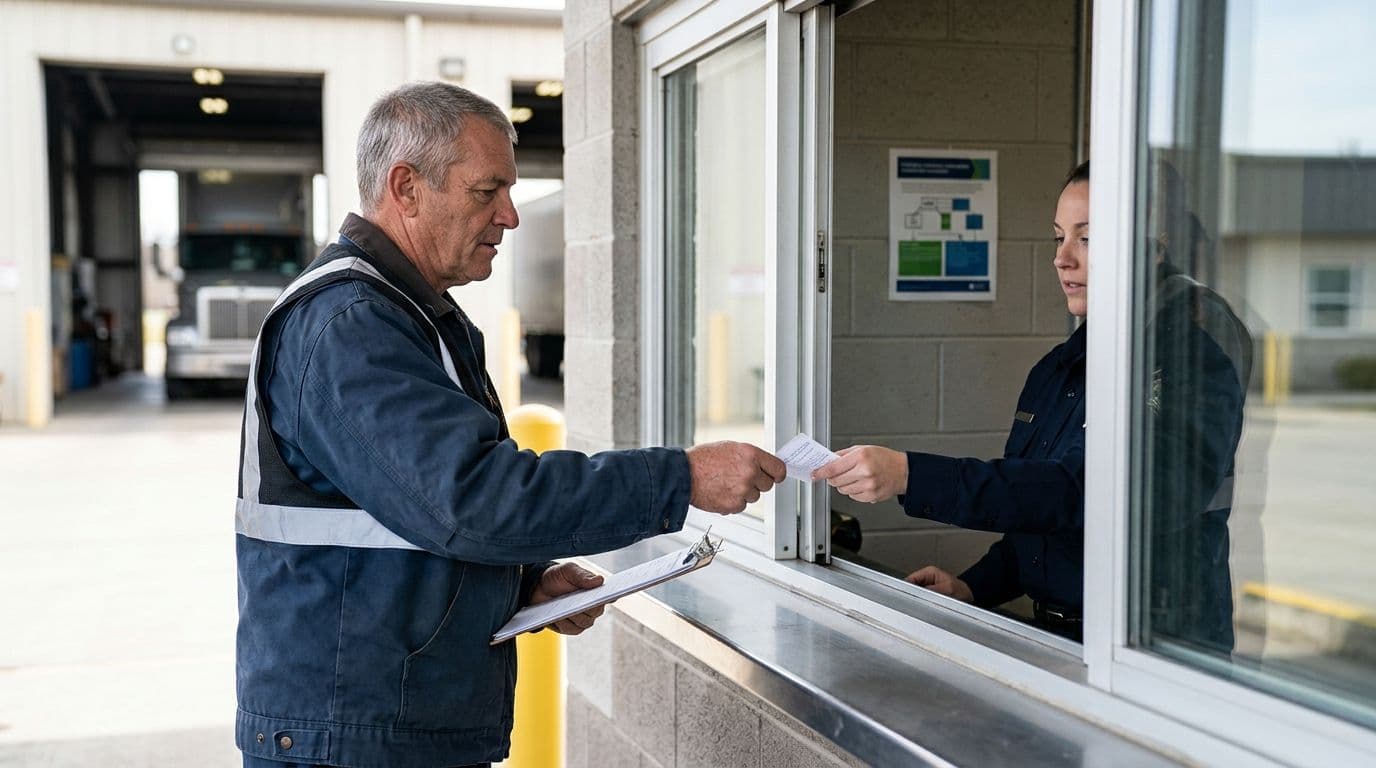

Indiana Senator Jim Banks (Republican) announced on February 10 the launch of a tipline called TruckSafe Tipline. It is designed for drivers and other market participants to report carriers and truckers who allegedly violate federal requirements: hiring or engaging drivers without legal status in the US, allowing individuals without proper commercial driving credentials, and ignoring the English language requirement critical for reading road signs and communication during inspections.
Banks positions the tipline as a safety tool and a mechanism to accelerate federal response to potential abuses in a sector that has recently been under political and regulatory scrutiny due to several fatal accidents in Indiana. The launch was reported by the industry publication CDL Life citing a statement from the senator's office.
However, a key nuance for the market is the 'official' status of the new line. There is no separate USDOT, FMCSA, or Office of Inspector General (OIG) page where TruckSafe Tipline is formalized as a federal complaint tool. Banks' statement says the information received will be reviewed by USDOT and OIG. However, OIG already has an existing federal mechanism for reporting fraud, abuse, and violations in transportation programs — the official OIG hotline, which, according to its description, redirects safety-related complaints to relevant regulatory divisions. For carriers, this distinction is not a formality: the channel of submission and legal qualification of the complaint affect processing speed, evidence requirements, and the control circuit the case enters.
The tipline launch is directly linked to the public outcry over a head-on collision in Jay County, Indiana, that occurred in early February. The senator's statement mentions four fatalities in this accident — a 50-year-old man, his two sons aged 19 and 25, and another person. Several publications emphasized that the truck driver involved in the accident was allegedly a foreign national and that his status and work history should be subject to federal investigation.
For the industry, the more important issue is that this accident triggered a public link between 'serious accident — carrier inspection — network of interconnected companies.' Media reports began circulating claims that the driver worked for the carrier AJ Partners, and federal authorities are investigating possible signs of a 'chameleon carrier' scheme, where companies change names, DOT numbers, legal structures, or associated management to evade the consequences of inspections and sanctions. According to Banks, US Transportation Secretary Sean Duffy also publicly mentioned the FMCSA investigation into the group of companies and described signs of carriers 'reincarnating' under new names.
Stay Updated with Industry News
Subscribe to our newsletter and get the latest trucking industry news, regulations updates, and career tips delivered to your inbox.
We respect your privacy. Unsubscribe at any time.
Formally, FMCSA and USDOT regularly handle cases of 'interrelated carriers' and 'chameleon carriers,' but it is rare for a specific state-level accident to become a political argument for launching a new 'reporting' channel and for exerting pressure on the federal control circuit. This creates a risk of a chain reaction in the market: a wave of complaints could lead to an increase in targeted inspections and document requests, as well as a stricter interpretation of affiliation signs between companies.
The list of reasons mentioned in the materials about the line's launch boils down to three blocks.
The first is the alleged engagement of drivers who 'are not legally in the US.' This is the most politicized point but also the most toxic in terms of operational consequences: even a single signal reaching the right circuit (OIG, immigration authorities, FMCSA) can trigger parallel processes — from employment and status document checks to expanded safety audits.
The second is 'not authorized to drive a truck.' Practically, this can mean questions about the validity of the CDL, medical clearance, disqualification history, use of someone else's identity, fictitious training, and compliance with the driver qualification file (DQF) requirements at the carrier. For a fleet, even suspicion of documentary non-compliance is a risk of out-of-service on the road, insurance consequences, and, in the event of an accident, increased civil liability.
The third is non-compliance with the English language requirement. Here, the context of 2025 is important: violation of English Language Proficiency has in some cases led to out-of-service under CVSA criteria, meaning the issue has ceased to be 'soft' and has become a direct risk of downtime and trip disruption. Banks directly links ELP to safety: a driver must read signs and communicate during inspections and after accidents.
A separate problem noted both in the professional community and in the news is discrepancies in the details reported by different sources about the same driver. Banks' public statements included a version of illegal border crossing in December 2023 and subsequent admission to the country through the CBP One app. A Fox News publication citing DHS mentioned a different date and formulation — entry on December 19, 2024, in Nogales (Arizona) through CBP One with conditional parole. For the industry, this is not a 'political detail': the exact status and documentary entry trajectory can determine whether the person had the right to work, what checks could or should have been triggered at the hiring stage, and where exactly control failed.
There is currently no publicly available primary document from DHS/ICE or court materials that would resolve the discrepancy. As a result, carriers receive mixed signals: the tipline initiative is built on loud theses, but part of the facts around the key case remains contentious.
TruckSafe Tipline is essentially an attempt to institutionalize whistleblowing/signals within the industry and turn them into a stream of complaints to the federal circuit. For the market, this means several practical consequences.
Firstly, the likelihood of inspections based on 'external' signals increases. Previously, the main trigger was accidents, inspections, CSA patterns, planned audits, but now an additional source becomes a complaint from a competitor, former employee, client, dispatcher, or even another driver. This enhances the importance of compliance procedures not 'on paper' but in daily practice: how driver files are maintained, what is stored in the DQF, how work authorization checks are documented, and how ELP assessment is recorded.
Secondly, groups of interconnected legal entities fall into the risk zone. The 'chameleon carrier' topic has recently sounded not as an abstraction: publicly discussed are examples where the same circle of people manages several companies, and name changes and DOT identifiers are used to continue operations after sanctions. If FMCSA indeed expands investigations into such networks, the consequences will be systemic: from suspension of authorities and registration revocations to disruptions with contracts, insurance condition reviews, and blockages in verification systems with shippers and brokers.
Thirdly, for drivers, this increases the likelihood that a conflict with an employer or a dispute over payment/conditions may result in a 'safety' or 'status' complaint. Operationally, this increases the importance of document cleanliness and transparency of employment relationships, especially in the owner-operator segment, who work through small carriers or lease schemes.
Even if the tipline remains an initiative of the senator's office without a separate federal regulation, its mere existence creates an informational effect: market participants receive a signal that complaints are welcome, and political cover is provided. But practical effectiveness will depend on where exactly the messages go, how they are filtered, and what is considered sufficient grounds for action.
The federal OIG already has a formalized channel for receiving information and a routing procedure. If TruckSafe Tipline simply directs complaints to existing OIG/USDOT systems, it could become a 'funnel' for industry signals. If it is primarily a collection of complaints by the senator's office with subsequent manual case forwarding to agencies, then we will see a more selective response — focusing on high-profile stories and politically significant plots.
For carriers, the practical takeaway is important: in 2026, compliance with driver status, qualification checks, and ELP adherence ceases to be an internal company matter. It becomes potentially verifiable at the initiative of third parties, including outside standard inspection cycles.