The United States Department of Transportation (USDOT) plans to initiate a rulemaking process that will require all commercial driver's license (CDL) exams to be conducted only in English. Transport Secretary Sean Duffy announced the plans, alongside tougher measures for carrier oversight—from tackling 'chameleon carriers' to verifying physical addresses for DOT numbers and increasing control over ELD tampering. This was reported by CDLLife.
The announcement comes amid ongoing industry-wide tightening of safety compliance approaches and increased inspection activity. However, an important detail for the market: as of the news publication, there is no independent confirmation of the initiative in the form of a USDOT/FMCSA press release or Federal Register publication found in open sources. This does not disprove the initiative itself but means that carriers and training centers must rely on statements and subsequent regulatory steps before specifics on timing, wording, and implementation mechanics become available.
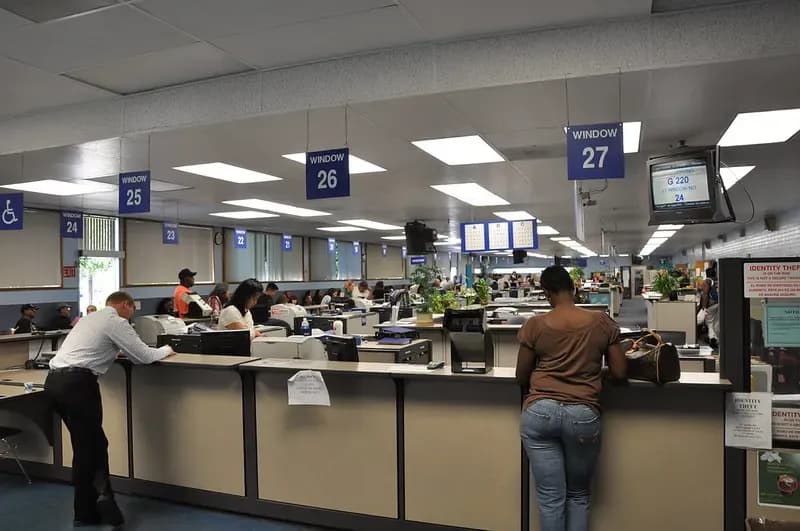
According to Duffy, USDOT will begin rulemaking to establish the requirement that all CDL tests be administered only in English. In the current system, a significant portion of testing procedure authority remains with the states, and practices vary significantly. This initiative targets that variability.
As an argument, the minister pointed to examples of multilingual testing in certain states. Specifically, he stated that California offers CDL-related tests in 'twenty different languages.' The goal, as presented in the speech, is to standardize the entry threshold and link professional admission to basic language competence, which, according to USDOT logic, is directly related to safety: reading road signs, understanding instructions at weigh and inspection stations, interacting with inspectors and dispatchers.
Separately, Duffy made it clear that he would seek a stricter approach from states towards drivers who do not have sufficient English proficiency. However, he acknowledged the limitation of federal powers: USDOT cannot 'directly' revoke already issued CDLs—these rights are granted by the state. Essentially, it is a combination of two levers: an attempt to change the exam rules at the federal level through FMCSA and parallel pressure on states to more actively use their own disqualification mechanisms when insufficient language competence is identified.
Stay Updated with Industry News
Subscribe to our newsletter and get the latest trucking industry news, regulations updates, and career tips delivered to your inbox.
We respect your privacy. Unsubscribe at any time.
For the labor market, this is potentially a more sensitive step than it seems at first glance. If some candidates previously passed the theoretical block in their native language, switching to English-only will almost certainly increase the share of unsuccessful attempts and increase the average preparation time. For carriers in 'immigrant' regions, this could result in a local narrowing of the influx of newcomers—not necessarily due to a lack of driving skills, but due to the need to invest in language before entering the profession.
The second part of the statement is about carrier oversight and control infrastructure, which directly affects the competitive environment and risk management of large and medium fleets.
Duffy promised a 'crackdown' on chameleon carriers—carriers that, after sanctions, poor safety history, or financial problems, 'reborn' under a new name and new DOT/MC to continue operating without a negative trail. For the market, this is a painful topic: such schemes undermine the effectiveness of CSA/audits and create price competition not based on compliance.
If FMCSA indeed strengthens filters for identifying connections between companies (common beneficiaries, addresses, phones, dispatchers, insurance chains), it could accelerate the market exit of some 'gray' players. But it will also increase the number of false-positive 'flags' for legal businesses, where, for example, one owner manages several brands or restructures after acquiring assets.
Another announced vector is the verification of the carrier's physical location and barriers to registering 'paper' companies. Duffy formulated the problem extremely sharply: 'one person can get a hundred DOT numbers.' In practical terms, this hints at schemes where registrations are 'stamped' to the same mailbox or virtual office, complicating oversight and facilitating evasion of responsibility.
If address verification becomes systematic, it will hit micro-carriers and brokerage links that have lived on minimal administrative infrastructure for years. For 'white' fleets, the effect is twofold: on one hand, reducing the share of toxic contractors and accident/insurance risks in the chain; on the other, increasing bureaucracy when registering new legal entities, terminals, and branches, especially for companies scaling through regional sites and leased parking lots.
The third topic is ELD tampering. Duffy announced an intention to intensify actions against electronic logbook manipulations. For the market, this signals a likely increase in the number of targeted inspections (audits, roadside), as well as possible expansion of cooperation between FMCSA and state inspection units on signs of 'anomalies' in the data.
In the context of competition, this is more important than it appears in political statements. A tough line on ELD tampering usually reduces 'shadow productivity'—the ability to illegally increase hours and mileage. Compliant fleets receive a fairer price for labor and mileage, but in the short term, the market may face local capacity gaps, especially in segments with a high share of independent drivers.