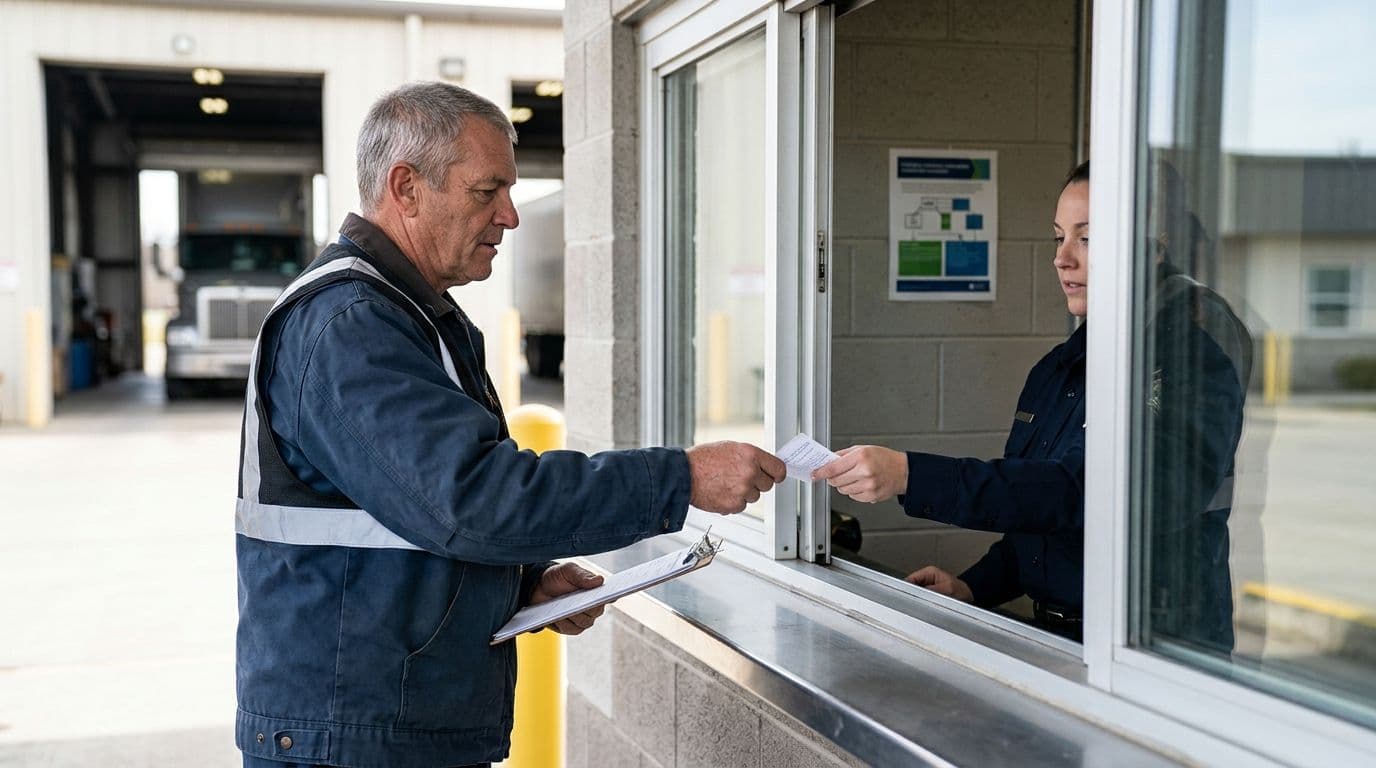
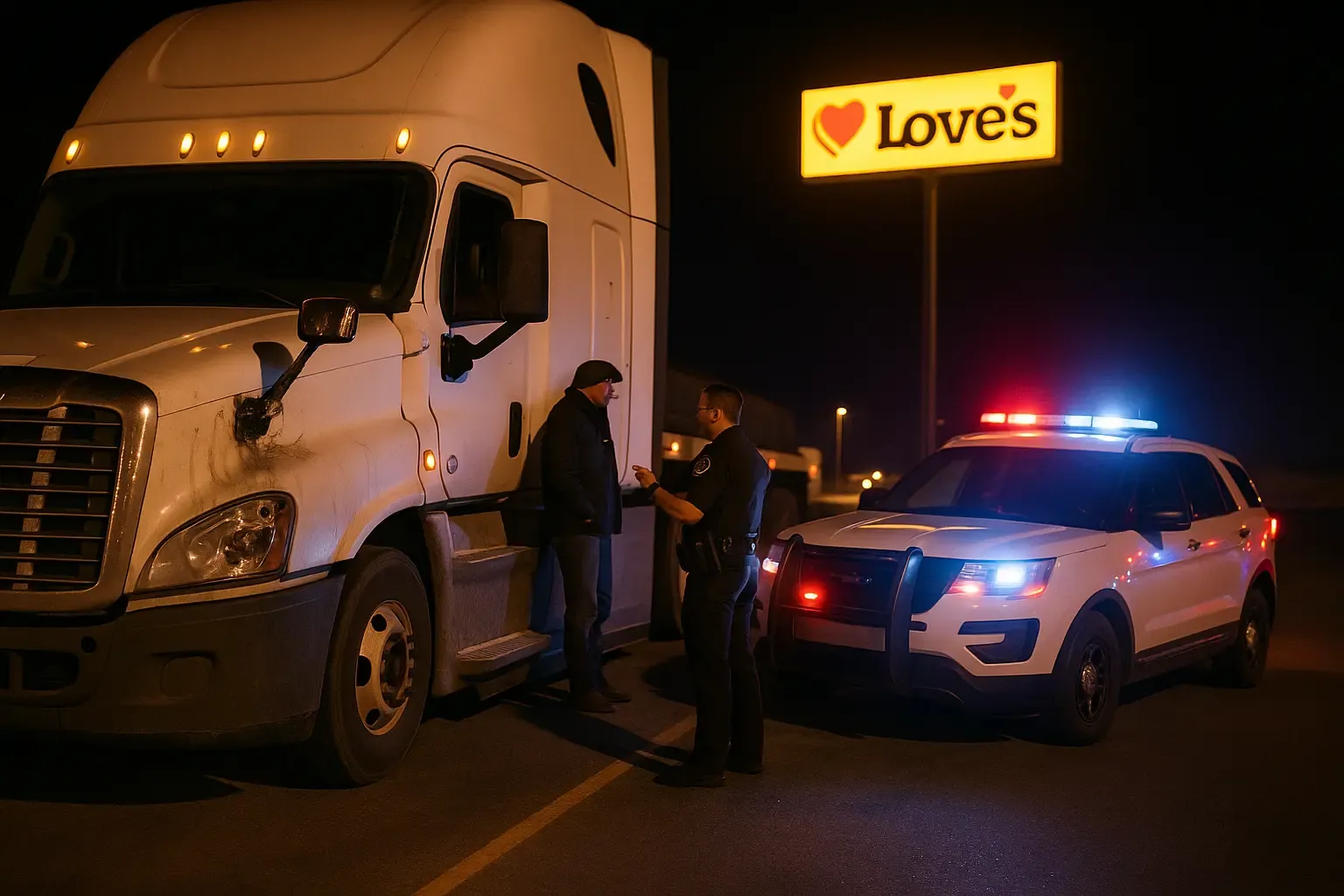
In Green River, Wyoming, truck driver Vaja Gelashvili was detained by immigration services after calling the police himself at Love’s Travel Stop on I‑80, trying to resolve damage to a side mirror. According to industry and local media, the incident occurred in the first week of February and quickly escalated beyond a typical parking lot 'hit-and-run' investigation: document checks shifted to the application of a new Wyoming law invalidating certain out-of-state driver’s licenses if the driver cannot prove lawful presence in the U.S.
Details of the case and the stance of local law enforcement were reported in detail by Cowboy State Daily. The story is notable for several reasons: it touches on the practice of checking 'non-domiciled CDL', discrepancies between federal CDL rules and state requirements for proving lawful presence, as well as operational risks for carriers when initial police contact is unrelated to traffic violations or weigh station inspections.
According to the chronology, Gelashvili parked his truck at Love’s and went for a shower. Upon returning, he found the side mirror damaged. Since this was a typical truck stop scenario—hit and run—the driver asked the staff to check the cameras. They replied that video access was only possible with police involvement, prompting him to call law enforcement himself.
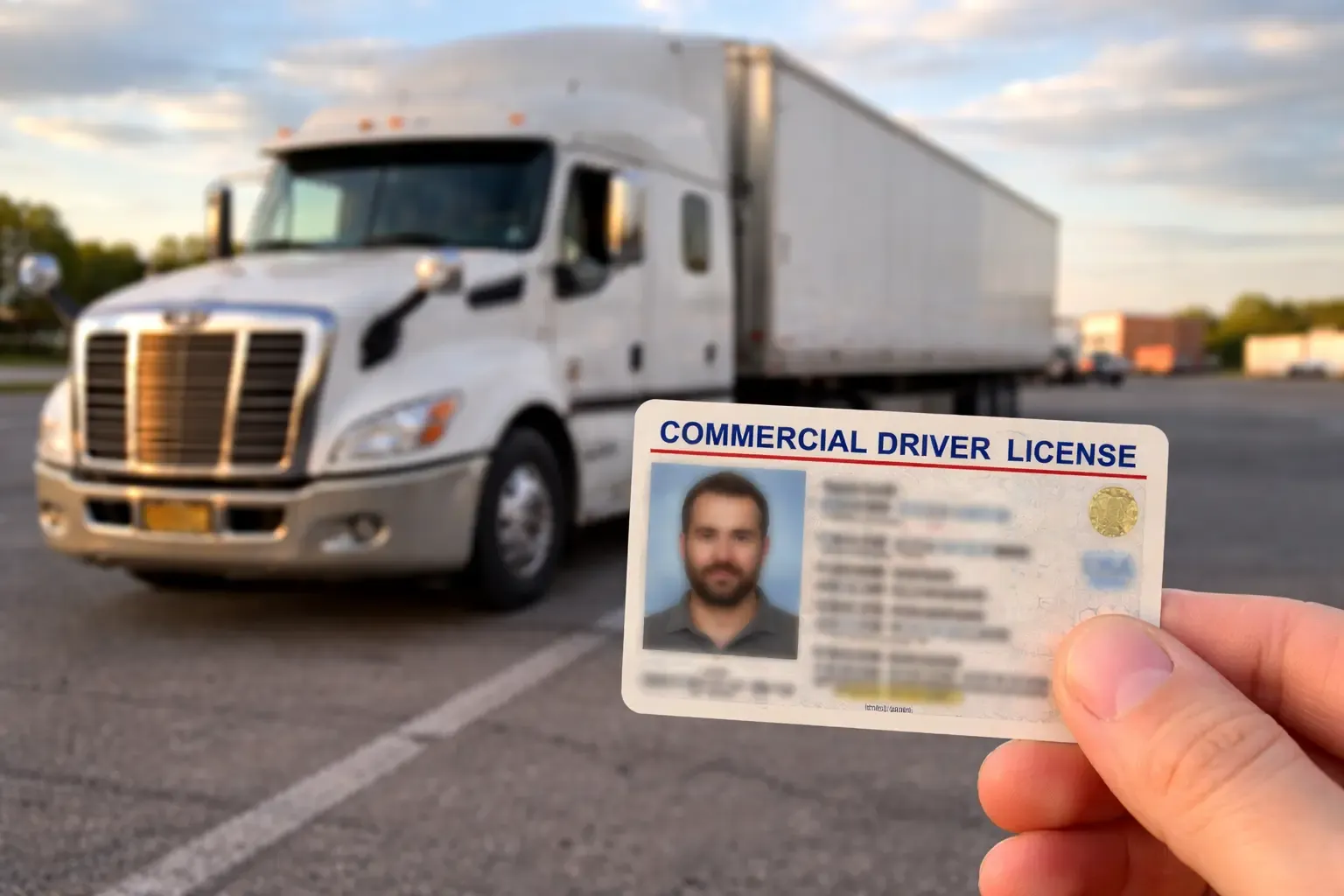
The situation then revolved around the status of his documents. The arriving officer examined the driver’s commercial license—reports mention a New Jersey CDL marked non-domiciled. As a result, it is claimed that the officer concluded the documents were insufficient to prove lawful presence in the U.S. under Wyoming law. Gelashvili was detained, and federal immigration services were contacted to issue an 'immigration hold'. Subsequently, the driver ended up in ICE custody; it was also reported that his release request was denied at the DHS level.
Importantly, the initial reason for calling the police was not related to driving under the influence, a road accident, hours of service violations, or a DOT inspection. It was a request for assistance in investigating property damage.
Stay Updated with Industry News
Subscribe to our newsletter and get the latest trucking industry news, regulations updates, and career tips delivered to your inbox.
We respect your privacy. Unsubscribe at any time.
Alongside the legal document issue, the original 'domestic' line remained—who broke the mirror and can the culprit be found. According to Sweetwater County Sheriff’s Office representative Jason Mauer, quoted by Cowboy State Daily, the investigation had limited leads: the suspected vehicle left before the driver noticed the damage, and the truck’s dashcam was not working at the time of the incident. The damage case, according to this information, formally remained open, but the prospects of identifying the culprit seemed slim.
For the carrier, this is the most unpleasant type of situation: an event starts as a minor breakdown (replacing a mirror and possibly a bracket) and ends with the risk of losing the driver and uncertainty about the location and availability of the truck/trailer. Publications mentioned that even the question of where the truck ultimately was remained unclear at some point.
In industry public retellings, the phrase 'non-domiciled CDL is not valid in Wyoming' was mentioned. In this form, it simplifies the real issue. Non-domiciled CDL is a federally recognized category of commercial licenses that states can issue if requirements are met (including the appropriate notation on the document). In practice, disputes in such cases often hinge not on whether the non-domiciled notation itself is valid/invalid, but on the state empowering officers to interpret the absence of proof of lawful presence as grounds to consider the presented license insufficient.
This is exactly how, according to Cowboy State Daily, law enforcement’s position appeared: the driver presented a New Jersey CDL but did not provide documents proving lawful presence, after which he was detained 'under the new law'. So, the key factor is not interstate recognition of CDL per se, but the link to immigration status and the document package the driver can present on the spot.
The legal basis relied upon by law enforcement did not arise in February 2026. Since July 1, 2025, a Wyoming law has been in effect that makes an 'externally valid' license from another state insufficient if issued to a person qualified as an 'unauthorized alien' in Wyoming, and there is no proof of lawful presence. In 2025, discussions revolved around some states issuing regular driver’s licenses regardless of immigration status, and Wyoming sought to close this 'corridor' on its territory.
For the industry, the practical side is important: in 2025, when the law was discussed, assessments were made that the direct impact on the freight market might be limited because obtaining a CDL usually requires status verification and stricter procedures. But the Gelashvili case shows that commercial license holders are also at risk—especially if it involves non-domiciled documents and a state of issuance under increased regulatory scrutiny in another, federal dimension.
The context is also added by the fact that New Jersey has been repeatedly mentioned in recent years in discussions about the quality of administering non-domiciled CDL amid checks and compliance requirements from federal agencies.