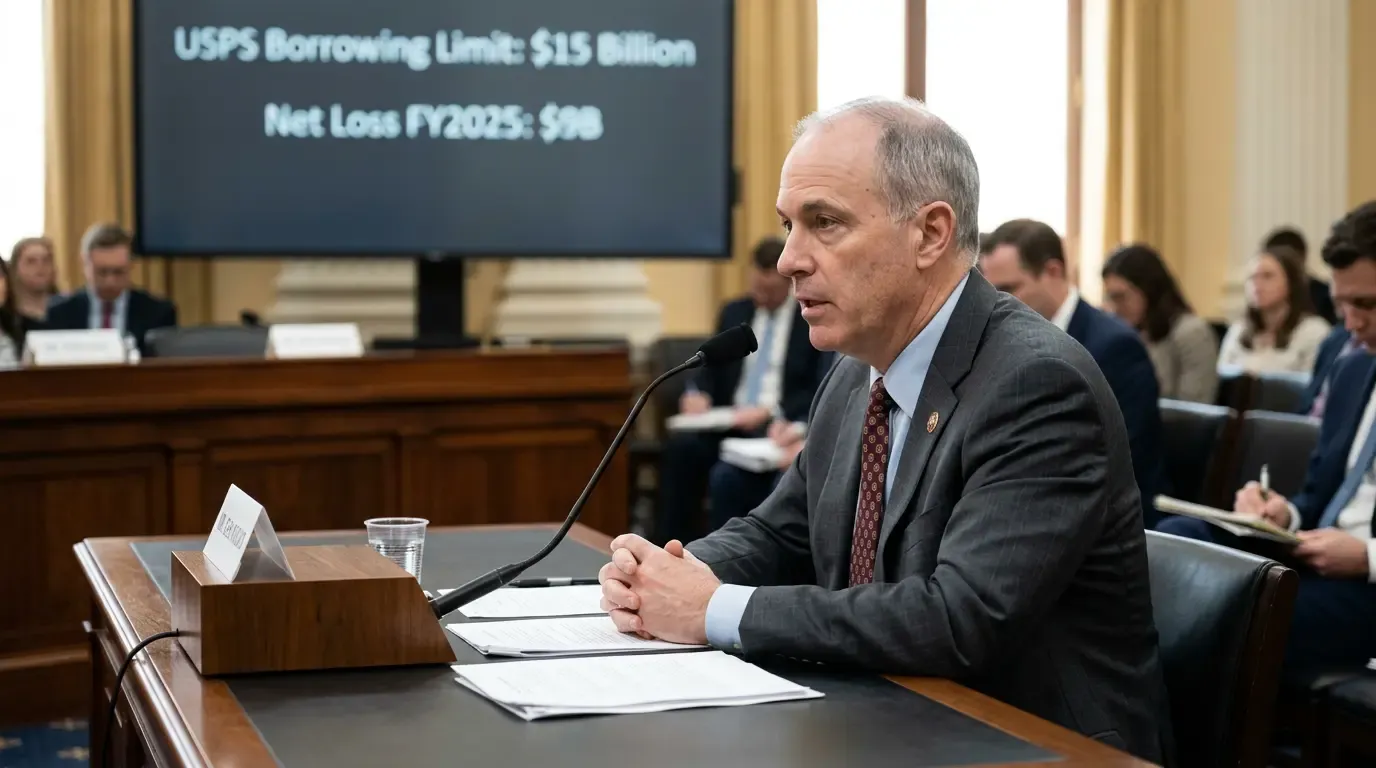
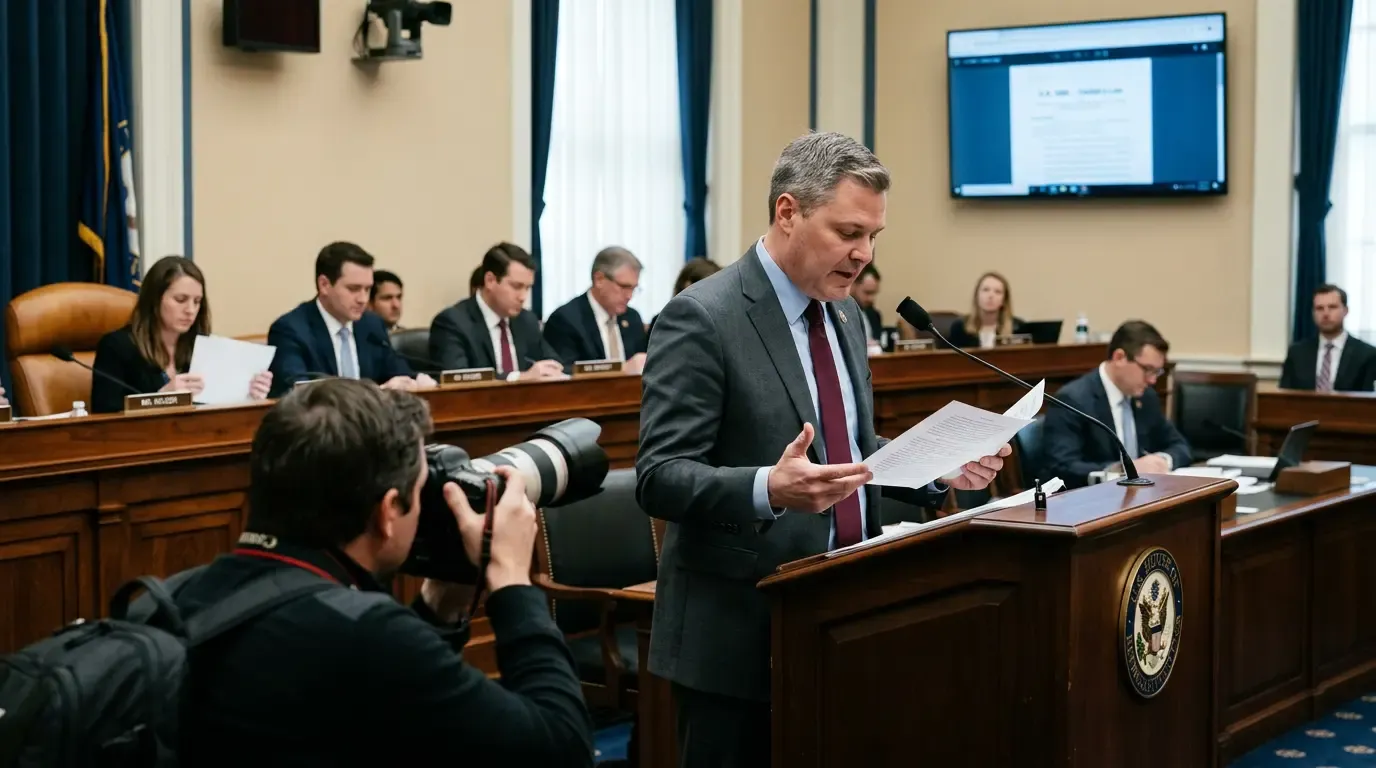
The House Transportation and Infrastructure Committee has scheduled a review and markup of bill H.R. 5688, known as Dalilah’s Law. The updated text was published on March 16 by the initiative's author, Congressman David Rouzer (Republican, North Carolina), ahead of the committee meeting on March 18. Rouzer's announcement presents the bill as a package of measures that simultaneously tightens CDL issuance requirements, enforces stricter English language proficiency standards, and introduces restrictions against dispatch/broker schemes linked to freight fraud and cargo theft. Details are outlined in the official release on Rouzer's website — updated text and description of Dalilah’s Law.
According to the initiator, the bill aims to close several "loopholes" — from control over non-domiciled CDL to practices where a driver formally holds valid licenses and work permits but does not meet key safety and verifiability requirements. Rouzer's release emphasizes that the document "supports and expands" recent actions by federal regulators, including enhanced checks on English Language Proficiency (ELP) and stricter mechanisms for verifying driver history when issuing non-domiciled CDL. Rouzer directly links the initiative to the administration's political agenda and expresses readiness to work with President Trump and Transportation Secretary Sean Duffy to advance the document. In his wording, this issue is presented as a matter of immediate road safety: "unqualified, illegally present foreign drivers behind the wheel of an 80-ton tractor-trailer endanger people," according to a quote from the release.
The name "Dalilah’s Law" is associated with an accident involving a child — Dalilah Coleman. The materials accompanying the bill discussion mention driver Partap Singh: he reportedly held a CDL issued by California and was detained by Immigration and Customs Enforcement (ICE) after the accident when authorities established his illegal presence in the country. In Rouzer's official statement, this episode is used to illustrate why the author believes existing control mechanisms are insufficient if states can issue or maintain licenses with weak checks on status and candidate history.
One of the central parts of H.R. 5688 is language requirements. Rouzer's release states that the bill "requires" drivers to understand English at a level sufficient to read and comprehend road signs and communicate with law enforcement. It is specifically emphasized that if requirements are not met, the driver must be taken out of service (out-of-service) as part of enforcement. In practical operational terms, this is not about "recommendations" or soft measures: it involves linking ELP to an immediate ban on continuing movement if a check reveals non-compliance.
The second major line is non-domiciled CDL and the role of states in checks. Rouzer's description of the bill mentions a requirement for states to ensure they do not issue CDL to individuals illegally present in the country. Non-compliance entails federal-level sanctions — including withholding part of the funding. Industry publications recounting details of the updated text mention specific parameters: the first instance of non-compliance could lead to withholding up to 8% of federal highway program funds, a repeat offense up to 12%, with timing linked to the start of the new fiscal period (October 1, 2026). The same accounts mention "reverse checks" of already issued documents: an audit of existing non-domiciled CDL within a year. These elements are described in Rouzer's release in more general terms, but the logic of the structure is the same: to strengthen the federal leverage on state practices through money and the requirement for verifiable checks of driver status and history.
Stay Updated with Industry News
Subscribe to our newsletter and get the latest trucking industry news, regulations updates, and career tips delivered to your inbox.
We respect your privacy. Unsubscribe at any time.
The third part of the bill stands out by directly addressing commercial relationships in the transportation chain: banning "dubious foreign dispatch services and brokers" linked by bill supporters to freight fraud and cargo theft. Rouzer's release formulates this as strictly as possible: H.R. 5688 "prohibits" such structures and introduces a mechanism to combat "freight fraud and cargo theft." Industry recaps specify that this involves banning dispatch/broker entities located outside North America (outside the USA, Canada, and Mexico), with a minimum civil penalty of $50,000 per incident. A transition period is also described: the entry into force of the "foreign dispatching" block — a year after adoption.
A separate block in H.R. 5688 is declared as fighting "CDL mills" — schools and training/processing schemes that, according to the document's authors, release insufficiently prepared drivers onto the road or help circumvent requirements. Rouzer's release calls this a "crack down" and ties it to improving training quality. Accompanying descriptions of the bill also mention deadlines for restructuring some control procedures in training — specifically, a period of about 18 months for changes around self-attestation/certification of certain training elements. Rouzer's release does not reveal mechanisms at the level of training center regulations but emphasizes the goal: to limit the flow of candidates who gain access to commercial operation without proper training.
The promotion of "Dalilah’s Law" is accompanied by public support from several major industry organizations. The bill materials present the position of OOIDA: association president Todd Spencer sent a letter to committee chairman Sam Graves supporting the initiative as a way to close "loopholes" in the non-domiciled CDL system and establish ELP enforcement. OOIDA's argument separately highlights the "explosive" growth in the number of non-domiciled CDL in recent years, but without publishing specific figures in open materials. The American Trucking Association (ATA) also expressed support: ATA head Chris Spear, according to publication recaps, emphasizes the uniformity of standards, information exchange on driving records, and state responsibility for the quality of CDL issuance and control.
From a legislative history perspective, the document grew out of Rouzer's earlier initiative. A release on his website states that initially, in October 2025, the bill was introduced under the name Non-Domiciled CDL Integrity Act, after which the text was updated and expanded to the current version H.R. 5688 with the new name — Dalilah’s Law. The current step is consideration in the House Transportation Committee on March 18. It is at this stage that the bill usually receives technical amendments and clarifications of wording that determine how it will be applied in practice: through which checks, which databases, what compliance criteria, and what sanctions against states and commercial market participants will actually "activate" in case of violations.
Rouzer's announcement presents the initiative as comprehensive: ELP, non-domiciled CDL, sanctions for non-compliance, countering freight fraud and theft through dispatch-broker schemes, and pressure on "CDL mills." The updated text was published before the committee meeting, and the discussion in the House of Representatives begins with the transportation committee platform, where it will be decided in what form H.R. 5688 will continue through the procedure.