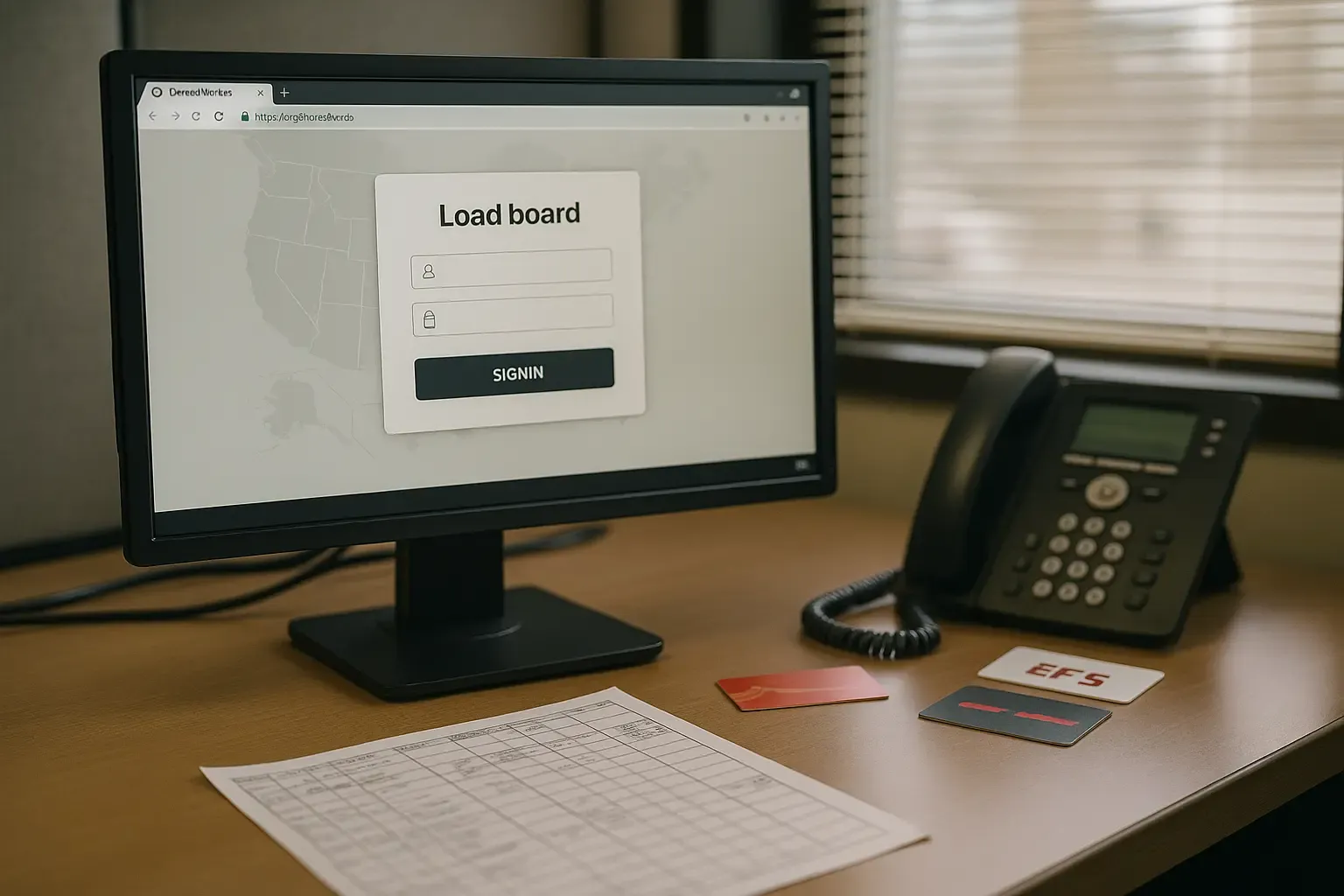

The U.S. Federal Motor Carrier Safety Administration (FMCSA) has opened public discussion on a request for exemption from electronic logging device (ELD) requirements, which, if approved, would allow some drivers to keep records of duty status (RODS) on paper. The request was submitted by the Federation of Professional Truckers (FOPT) "in the interests of its members and any other professional drivers who choose to participate." According to an industry publication, by the middle of the discussion period, the dossier had gathered 325 comments from individuals and organizations, and the feedback window closes on March 11, 2026. This is reported in a publication by CDLLife.
Formally, the application hinges on two arguments: financial burden, primarily for small carriers and owner-operators, and technical malfunctions of equipment/software, which in real-world operation turn HOS compliance into a separate administrative process. However, the content of the comments shows that the debate has gone far beyond "device and subscription costs." In fact, the industry is once again discussing what is more important for safety and the competitive environment: strict digital status tracking or the ability for manual logging, which is easier to "adjust" to the trip.
The application is described as a request for an exemption that would allow the use of paper logbooks instead of ELDs for recording RODS. An important detail is that supporters' comments more often express not a demand to "abolish ELDs for everyone," but a request for the right to choose. That is, a model where a driver or carrier can remain on ELD or switch to paper is positioned as a compromise between regulatory goals and the economics of small businesses.
From a compliance perspective, this means that part of the fleet will return to inspections based on handwritten forms, with accompanying questions: how will inspections match actual movements with records, how will uniformity of control be ensured, and what tools will FMCSA and states have for investigations after accidents. Opponents point out that the "electronic trail" is a key value of ELDs, and it doesn't exist on paper.
Most supporting comments fall into three motivations.
Stay Updated with Industry News
Subscribe to our newsletter and get the latest trucking industry news, regulations updates, and career tips delivered to your inbox.
We respect your privacy. Unsubscribe at any time.
First — economics. Drivers and small carriers directly link ELD expenses (equipment, maintenance, subscription, replacements in case of breakdowns) to the overall cost picture, where insurance, tires, repairs, and equipment financing are also becoming more expensive. For large fleets, ELDs have long been part of the standard IT infrastructure, but for individual owner-operators, it's often "just another mandatory line" without an obvious return in the form of higher rates.
Second — reliability and operational failures. Commentators describe situations where ELDs incorrectly record status, "eat" minutes during switches, or behave unpredictably with connectivity and power issues. The very idea of a paper alternative often sounds like "simple backup" to supporters: if the equipment breaks or works unstably, the driver should not risk HOS violations due to the device.
Third — the behavioral effect of "racing against the clock." Several comments in the dossier (as retold by the publication) claim that ELDs increase stress and provoke haste: the driver sees a continuous countdown, and delays in loading/unloading and queues "eat" legal hours, after which they have to catch up with the schedule. This leads to familiar market complaints: speeding on roads, sharp maneuvers in heavy traffic, the desire to "squeeze through" before time runs out, and stopping "wherever possible" when nearby parking is already full.
A separate issue is the conflict around detention. Commentators link the problem not only to ELDs per se but to the fact that waiting at the shipper/receiver is often unpaid or underpaid, while HOS hours continue to be consumed. As a result, ELDs are perceived not as a safety tool but as a mechanism that records the loss of productive time and makes it irreversible.
Opponents of returning to paper logs hit the most painful point of the old model — the ease of falsification. Comments feature traditional American market nicknames for paper logs like "comic books" and "swindle sheets," directly implying that almost any schedule can be "drawn" if desired. The logic of opponents is simple: if part of the market returns to paper, the share of HOS violations will increase, and so will the risk of fatigue driving.
Another argument is competitive pressure. If "bad players" can work more than the legal time and still look "clean" during inspections, it will give them a price advantage. The chain is clear to any operations director: dumping, margin pressure on compliant carriers, and attempts to "catch up" with violators to avoid losing contracts.
And of course, control and investigations. Safety specialists in the discussion (as retold by CDLLife, a safety director speaking against it is mentioned) emphasize that ELDs provide a verifiable data set important for audits, inspections, and post-incident analyses. Paper does not provide such an evidentiary base, complicating the work of both regulators and insurers/lawyers in resolving disputes.
However, even among opponents of paper logs, there is noticeable fatigue with the current model: some commentators acknowledge that HOS and their application practices require changes but suggest moving towards flexible rules rather than returning to manual logging.