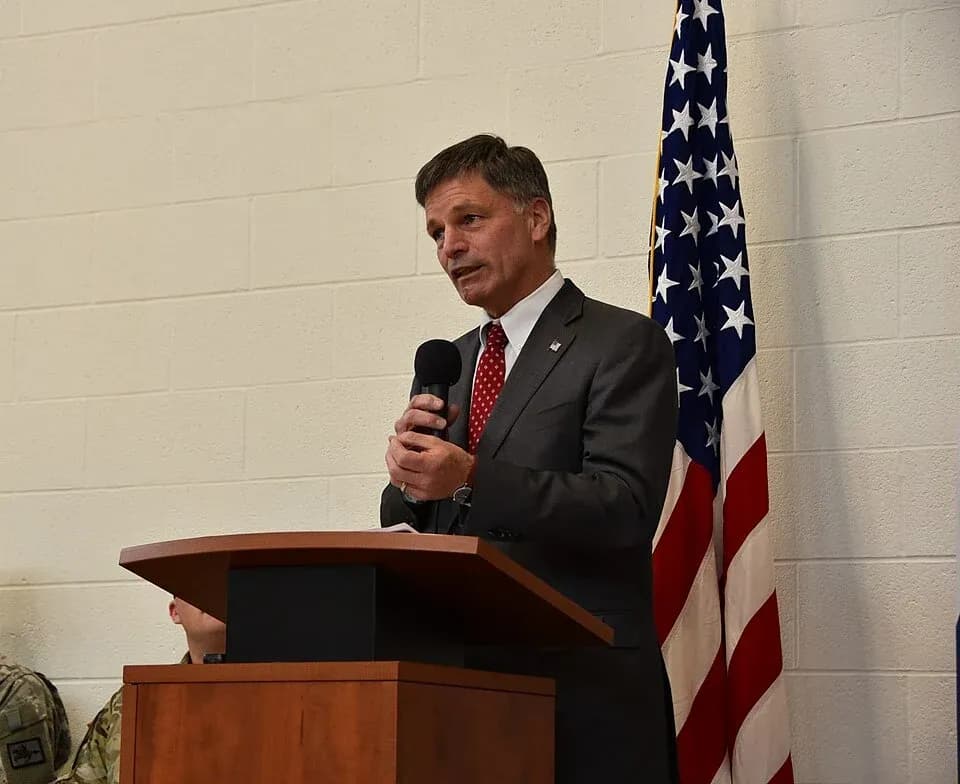
On March 5, Wyoming Governor Mark Gordon signed House Bill 32 (HB 32), which shifts the enforcement of federal English language proficiency requirements for commercial drivers (ELP) from the narrow jurisdiction of the Wyoming Highway Patrol (WHP) to a broader scope where virtually all local law enforcement agencies can participate. This means that not only WHP inspectors/troopers with federal certification for such checks, but also any police officers and sheriff's deputies, are now authorized to stop commercial vehicles and take action against drivers who cannot demonstrate the required level of English.
Essentially, the state is creating its own mechanism for enforcing federal standards and expanding the scope of control across the entire road network—from interstate corridors to local routes. For the market, this means one thing: the likelihood that the issue will arise not at a WHP checkpoint or during a targeted inspection, but during a routine stop by a local officer, significantly increases. For carriers regularly operating through Wyoming (primarily on I-80), this heightens operational risks—from trip delays to the need for emergency driver changes.
Before HB 32, ELP enforcement in Wyoming was tied to the capabilities and number of WHP officers authorized to conduct checks under federal standards. The new law expands the control "funnel": the state explicitly allows all law enforcement officers and their units to record ELP violations and remove drivers from the road under state procedures.
The most notable part for the industry is the sanctions outlined in the law, which add a financial-criminal component at the state level to the federal "out of service" logic (removal from operation):
For the first detected violation—a $1,000 fine for a commercial driver who cannot confirm English proficiency according to federal criteria.
Stay Updated with Industry News
Subscribe to our newsletter and get the latest trucking industry news, regulations updates, and career tips delivered to your inbox.
We respect your privacy. Unsubscribe at any time.
For a repeat offense—if the driver again operates a commercial vehicle in Wyoming before demonstrating compliance—another $1,000 fine and classification as a misdemeanor, with potential penalties up to 90 days in jail.
For employers, this creates a new practical situation: even if a driver "slips through" one state and is stopped in another without consequences, in Wyoming, a repeat trip after a recorded violation can escalate from a fine and downtime to an arrest. This raises the stakes for errors in personnel selection and dispatching, especially on transit lines.
HB 32 is tied to the existing federal ELP standard for commercial drivers. The essence of the requirement is known to anyone who has undergone inspections and safety audits: the driver must be able to communicate in English at a level sufficient for work tasks. This usually includes the ability to communicate with the "public" (broadly defined as road users and clients), respond to official inquiries during stops and inspections, maintain and fill out logs/documents, and read road signs in English.
The key point for practice: the law does not introduce a "new state exam." It expands the circle of those who can initiate a check and then "land" the consequences at the Wyoming level. This means that driver experience on the line will depend not only on inspectors familiar with the ELP procedure but also on how local officers interpret and apply their authority during real stops.
According to data presented by WHP leadership to lawmakers, after the federal enforcement approach changed last summer (June is mentioned as the starting point in the materials) until mid-February, 775 ELP violations were recorded in the state. Nineteen arrests related to repeat episodes are also noted.
These figures are important not in themselves but as an indicator of the scale of the phenomenon for Wyoming: it is not about isolated cases but a flow that the highway patrol already sees in daily work. If these volumes are "distributed" across the entire state law enforcement framework, the number of control points will increase, and so will the likelihood of stops where language becomes the decisive factor.
At the same time, in available industry publications outside the original report, there is no independent confirmation of these specific figures yet; major industry media mainly discuss federal compliance tightening as a factor in the rate and capacity market, without delving into specifics about Wyoming and HB 32.
The context of HB 32 lies in the federal ELP trajectory. It has long been discussed in the industry that back in 2012, during the Obama administration, inspectors were effectively instructed not to remove drivers from operation solely based on insufficient English. Later, this line was reportedly reversed: last summer, under the Trump administration, the approach was tightened, and consequences for ELP began to be applied more strictly again.
For Wyoming, this is important due to the geography of freight flows: the state is not just a "local market" but a transit point for interregional transportation, where east-west flows intersect. Any changes in the likelihood of stops and in the consequences "on the spot" quickly turn into practical expenses—downtime, delivery window disruption, tractor redistribution, towing/parking fees, crew replacement costs.
The Wyoming Highway Patrol supported the bill. Agency representatives told lawmakers that the department already conducts such checks, and the new law allows "using all state law enforcement assets" to more quickly identify drivers who, in their assessment, pose safety risks. The wording is important: the focus is not on immigration status or labor relations but on road safety and manageability of the situation during stops and incident investigations.
Parallel to this, a political line is also heard: discussions mention support for efforts to establish a strict approach to ELP at the federal level from Congresswoman Harriet Hageman (Republican Party, Wyoming). For the industry, this means that the language issue, from a "floating control practice," is once again becoming a stable direction of enforcement—first at the FMCSA/inspection level, and now through states ready to establish sanctions with their own laws.
During the consideration of HB 32, some lawmakers raised the issue of company responsibility. The complaint sounds familiar: if a driver who fails ELP is on the line, it is often not only the driver's personal choice but also the hiring, training, and control practices of the carrier or intermediaries who close trips at any cost. Critics noted that the law focuses on punishing the driver but does not add direct sanctions for companies that, they say, may systematically hire people without sufficient training and thereby shift the risk to the performer.
Although HB 32 is a story of one state, it fits into the national trend of 2026: increased control over discrepancies (drivers, carriers, schools) gradually squeezes part of the capacity from the market or makes it less predictable. In industry assessments discussing this effect, there is an expectation that stricter enforcement will support spot rate growth by reducing the available supply of tractors and drivers. However, analysts are not unanimous: part of the market believes that the impact will be limited and will not lead to a "mass exodus" of capacities.
Against this backdrop, Wyoming appears as a state that is not waiting for federal practice to fully settle but is building its own rapid response system. The details of the law and sanctions are described in the publication Cowboy State Daily, and they set a new level of risk for transit transportation through I-80: control becomes more "everyday," and the cost of repeat violations is significantly higher than a regular ticket and downtime.