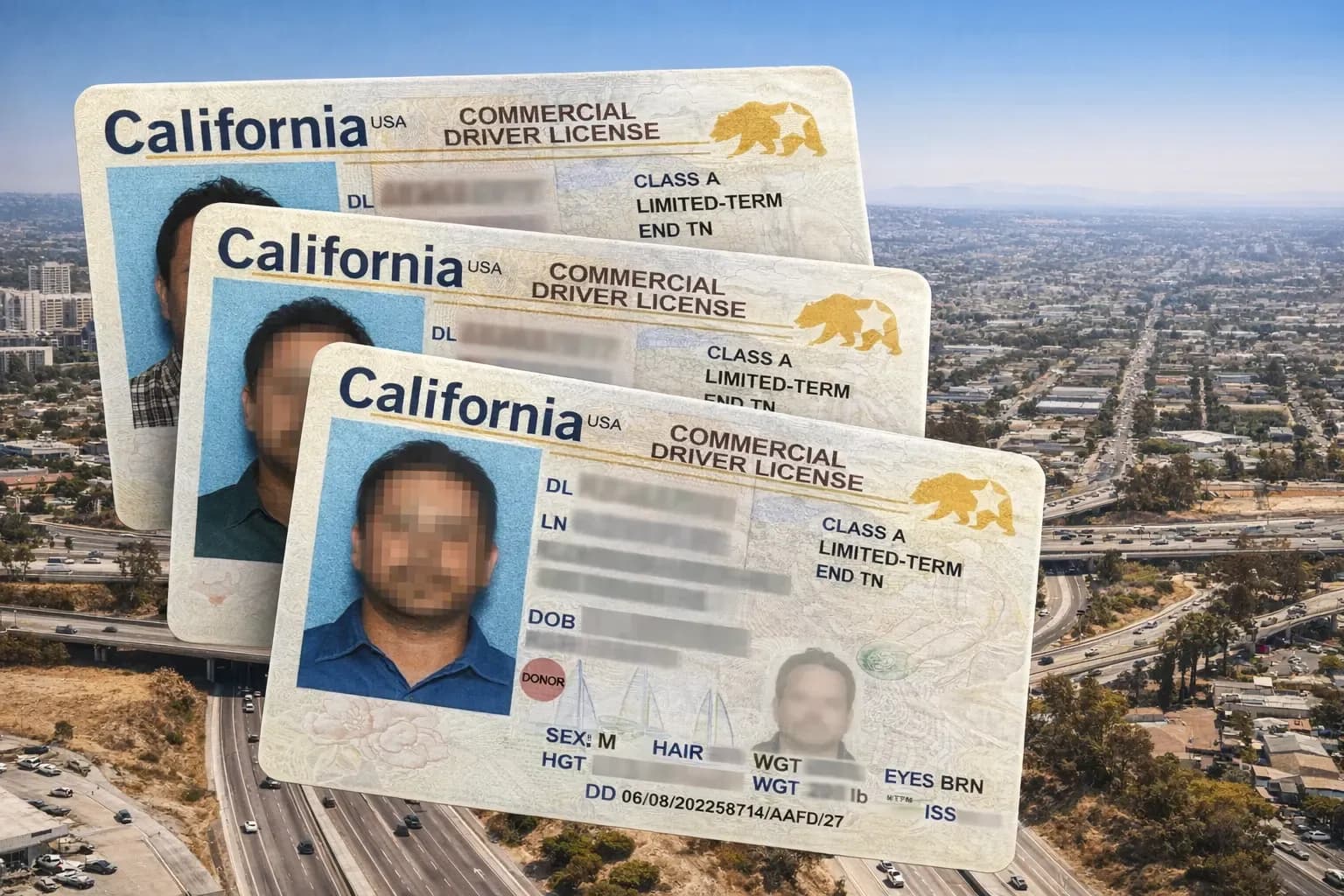

Missouri lawmakers launched a review of commercial driver's license (CDL) requirements and scheduled House hearings following a notable road incident: a semi-truck reportedly drove the wrong way on Highway 6, and the driver failed an English proficiency test at the stop. The situation quickly escalated beyond a typical road incident, triggering a bill that could change CDL work eligibility and maintenance rules in the state.
According to data presented in preparation for the hearings, the driver—Abdiasis Ibrahim Ali from Minnesota—was stopped at the end of February. After the stop, he was placed out of service. The key point for the initiative's proponents: following the roadside English Language Proficiency (ELP) test, the driver allegedly could not demonstrate sufficient English skills, including being unable to read basic road signs. For the industry, this is not just a formality: ELP is directly related to whether a driver can correctly understand inspector instructions, read road signs, navigate detours, and handle documentation during incidents.
Hearings are scheduled for March 4 at the State Capitol. Proponents present the issue as a matter of public safety, emphasizing that it involves operating a vehicle weighing up to 80,000 pounds. In lawmakers' rhetoric, this is used as an argument for stricter entry filtering into the profession and tighter control of current CDL holders.
Practically speaking, for carriers, another issue is more important: if the state starts highlighting ELP as a control criterion, it could lead to more out-of-service cases during inspections and increased delays on the line—regardless of where the driver obtained their CDL and in which state the carrier is registered.
HB 3491: What Missouri Proposes to Change
Stay Updated with Industry News
Subscribe to our newsletter and get the latest trucking industry news, regulations updates, and career tips delivered to your inbox.
We respect your privacy. Unsubscribe at any time.
In light of the incident, bill HB 3491 has been introduced into the legislative process, presented as a package of changes related to CDL requirements. The document is positioned as aimed at raising the bar for obtaining and maintaining commercial driver's licenses in Missouri, with particular attention to foreign applicants and compliance verification procedures.
The key market pivot is not so much the consideration itself, but how the bill will be implemented in procedures: through additional document checks, changes in exam eligibility, stricter requirements for training and testing providers, or expanded grounds for suspension/revocation of status. Currently, the main public reference remains the bill's text and its structure in the state's legislative database: HB 3491 (Missouri, 2026) — text and history.
Market participants specifically note the wording regarding "foreign applicants." In conditions of labor shortages in certain segments and geographies, any clarification of document and procedure requirements (e.g., status checks, legitimacy confirmation of foreign documents, translation and certification requirements) can change hiring timelines and onboarding costs for companies actively working with a multinational pool of drivers.
Why ELP is Back on States' Agendas, Not Just Federal Oversight
At the federal level, English requirements for commercial drivers have long existed, and the industry is accustomed to seeing them as part of the "basic compliance set." But in practice, the intensity of control heavily depends on state priorities and local divisions. The story in Missouri is significant because it shifts ELP from "formally mandatory" to "politically sensitive"—after the wrong-way driving incident, any gap in driver preparation appears as a systemic issue, not just an isolated failure.
For carriers, this means a higher likelihood that inspections will more frequently raise questions that might not have been previously addressed, and actions related to out-of-service will more often be taken based on communication and understanding of signs/instructions. Even if the bill is eventually softened or revised, public resonance usually changes inspector behavior: attention shifts to where it "burns."