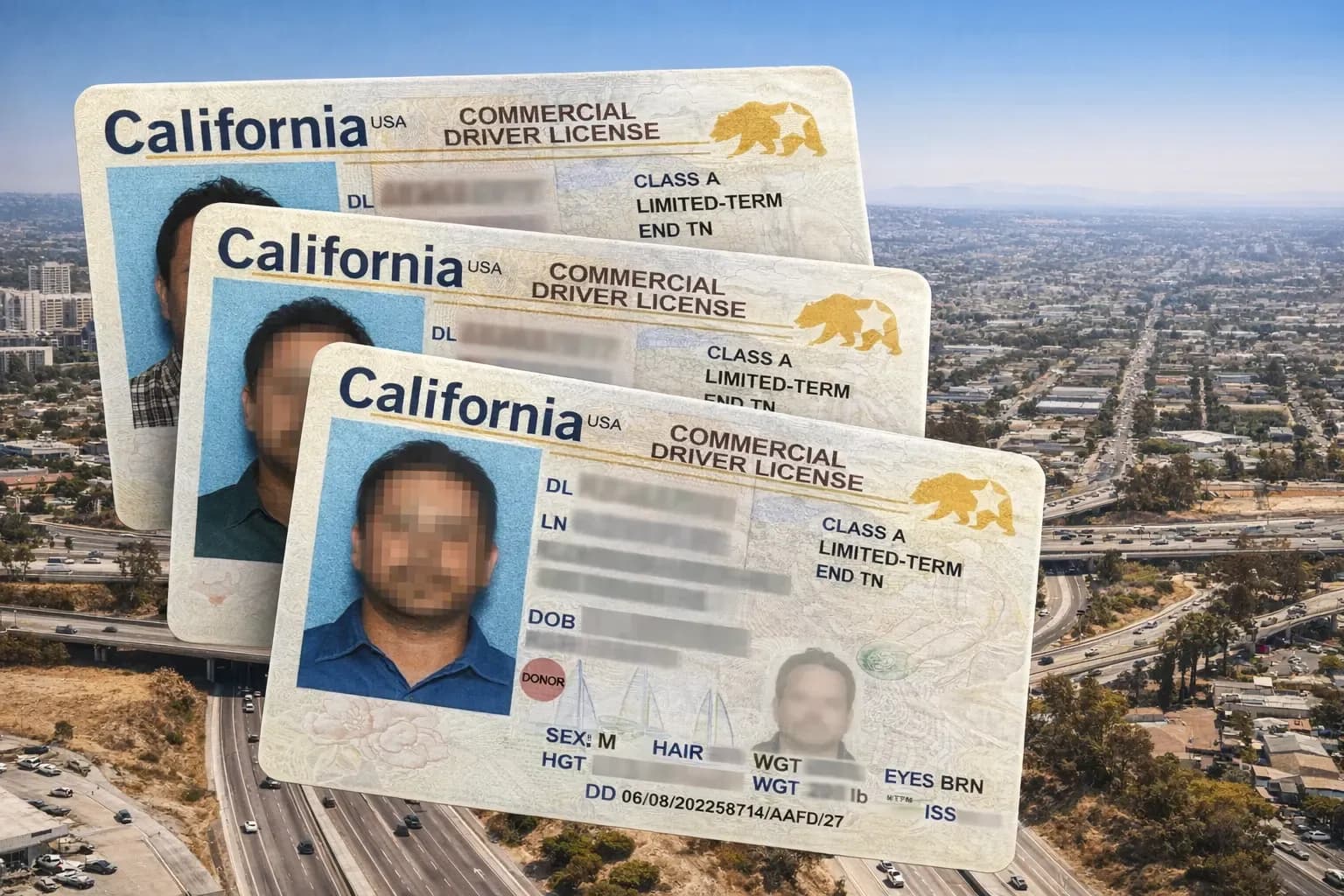

The Federal Motor Carrier Safety Administration (FMCSA) states it will not back down in its fight against so-called 'chameleon carriers'—operators who, after shutdowns, fines, or serious violations, re-enter the market under a new name, with new registration, and sometimes with altered ownership structures. According to FMCSA Administrator Derek Barrs, this campaign remains a priority, even if the agency 'bites off more than it can chew'—a phrase that has spread in the industry as a marker of how extensive the problem might be.
Barrs' statements come against the backdrop of two factors that are as important to the market as the rhetoric about 'bad players': the chronic workload on the inspection corps and vulnerabilities in the federal carrier registration system, where a significant portion of the information is initially submitted by the companies themselves and not immediately verified.
In American practice, 'chameleons' refer to operators who find a way to return to the system after losing the right to operate (or after actions that logically should lead to the loss of rights). The most typical scenario is re-registering under a different legal entity, using new or 'clean' identifiers, and restarting the business with the same key people or assets, but without the 'trail' of previous violations in public databases used by brokers, shippers, and insurers.
For the legitimate market, this hits several areas at once. First, there is the risk that an unsafe operator gains access to commercial routes again before the new 'wrapper' is matched with the old history. Second, the quality of initial compliance screening with contractors deteriorates: many verification procedures still rely on registration attributes and the company's recent history, rather than on 'related parties' and a complete picture of affiliations.
Barrs specifically pointed out a systemic problem: federal carrier registration is largely based on self-declared data and limited information sets, which do not always allow for quickly matching a 'new' applicant with an already known risk-profile history.
Stay Updated with Industry News
Subscribe to our newsletter and get the latest trucking industry news, regulations updates, and career tips delivered to your inbox.
We respect your privacy. Unsubscribe at any time.
While FMCSA has not disclosed the specific tools it plans to use to close this gap, the industry expects a move towards stricter identity verification and expanded inter-agency checks. At the market level, this usually means an increase in the number of 'flags' during onboarding, more document requests, and a longer cycle for granting access to cargo for new registrations—especially if the company has a complex structure or frequent data changes.
According to discussion participants, the catalyst was a situation in Indiana: at the end of February, U.S. Senator from Indiana Jim Banks publicly called on federal authorities to investigate possible 'chameleon' networks after a series of severe accidents in the state. Reports around this topic also included circumstances about drivers who are not U.S. citizens, adding political sharpness and accelerating the demand for demonstrative regulatory actions.
Simultaneously, the issue was picked up by journalistic investigations, which heightened the sensitivity of the topic for shippers and insurers: when the public sphere features a link between 'fatal accident—fly-by-night carrier—re-registration,' pressure on FMCSA almost inevitably turns into a demand to tighten entry controls.
A separate line is legislative activity in the House of Representatives. According to available information, a group of congressmen has introduced an initiative called the Safety and Accountability in Freight Enforcement Act, which should instruct regulators to study the scale of the 'chameleon' phenomenon and develop technological measures against repeat registrations. At the time of preparing the material, independent confirmations of the status and text of the initiative could not be found in open official sources within the available research; this does not negate the fact that the agenda itself has already become part of the political bargaining around road safety.