
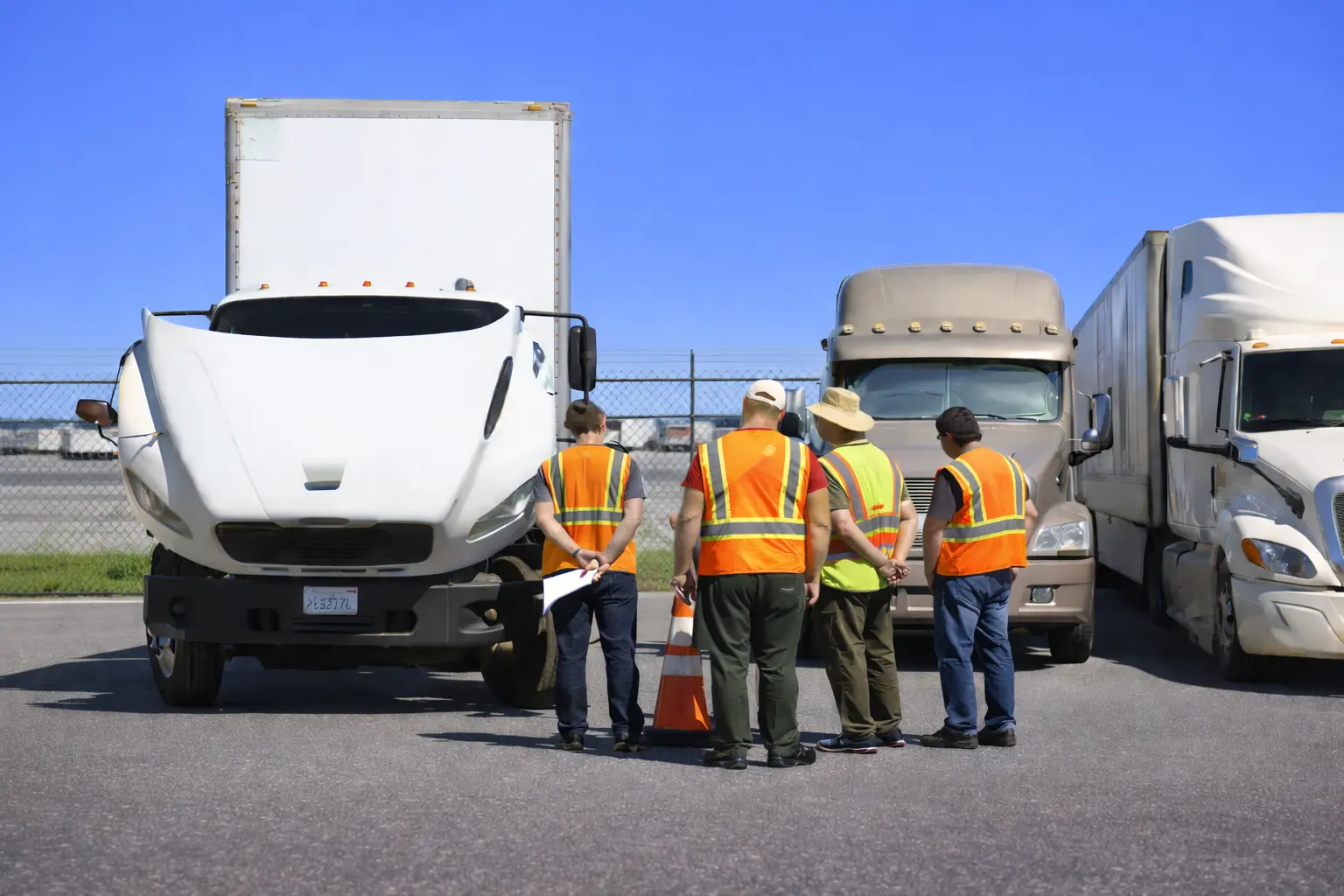
Free Massachusetts CDL Practice Tests — Your Complete Study Guide
Pass your Massachusetts CDL permit exam with 80%+ on the first try
- Questions 50
- To pass 40/50 correct (80%)
- Updated August 2026
- Free on this site
What You Need to Study
General Knowledge
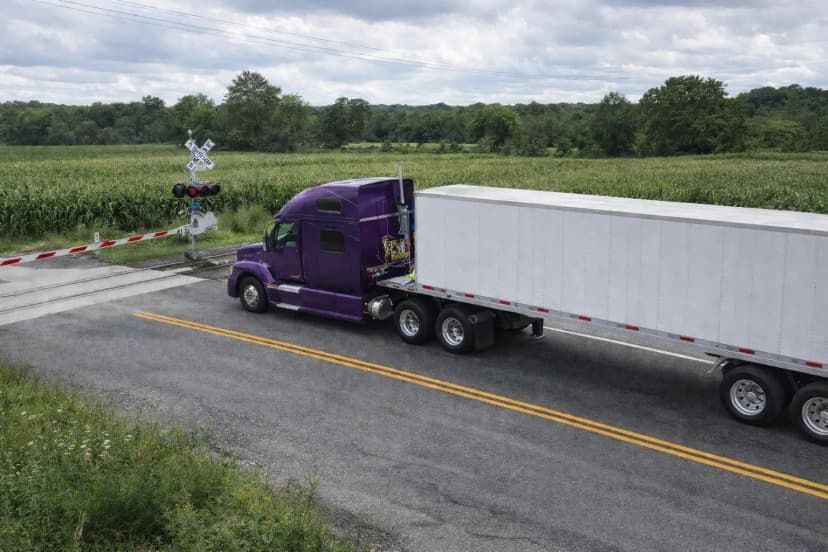
The foundation of your CDL exam. Covers traffic laws, safe driving techniques, vehicle inspection procedures, cargo handling, and federal regulations every commercial driver must understand.
Combination Vehicles
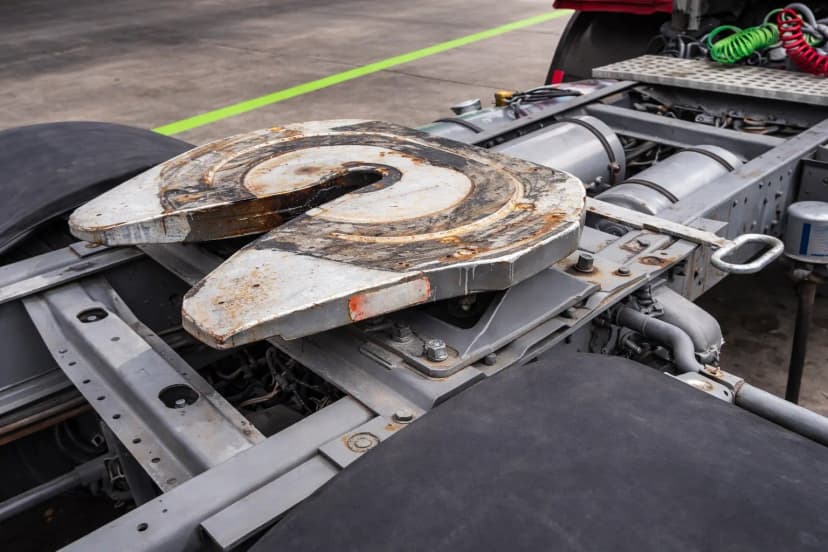
Essential for driving tractor-trailers. Covers coupling and uncoupling procedures, rollover prevention, inspecting combination vehicles, and safely maneuvering with attached trailers.
Air Brakes
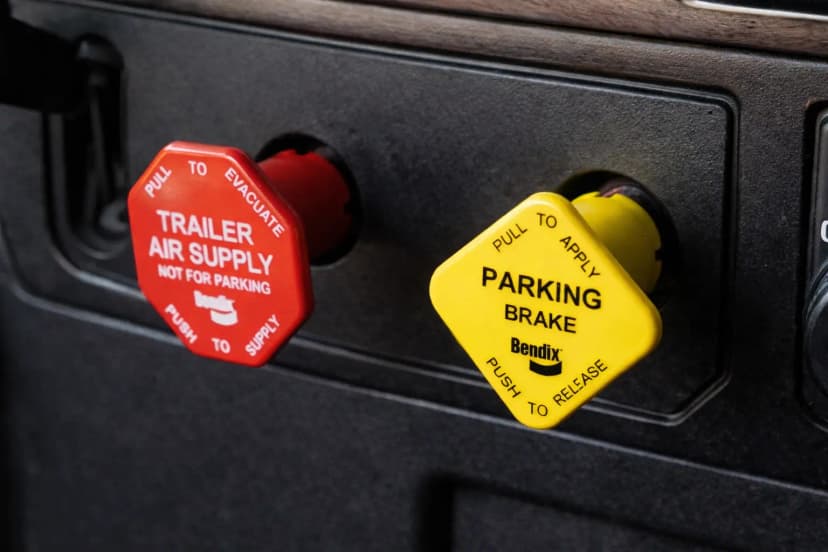
Required for any vehicle equipped with air brakes. Covers how air brake systems work, dual air brake systems, inspecting air brakes, and using them safely in all conditions.
Endorsement Tests
HazMat
Required for transporting hazardous materials. Covers placarding, labeling, loading procedures, emergency response, and compliance with federal hazmat regulations.
Tanker
Required for driving tank vehicles used to transport liquids or gases in bulk. Covers safe loading, unloading, and driving techniques specific to tanker operations.
Doubles & Triples
Required for pulling double or triple trailers. Covers coupling and uncoupling multiple trailers, safe driving practices, and inspection procedures for multi-trailer rigs.
Passenger
Required for operating vehicles designed to transport 16 or more passengers. Covers passenger safety, loading, emergency exits, and pre-trip inspection requirements.
Show all 10 practice questions with answers
What should you do when merging?
- Merge at a much lower speed than the flow of traffic.
- Check your mirrors to be sure the gap in traffic is big enough to enter safely.
- Pull into the gap first, then check your mirrors to see if it was large enough.
Correct answer: Check your mirrors to be sure the gap in traffic is big enough to enter safely.
Your truck accelerates slowly and needs much more room than a car, so you must enter traffic through a larger gap. Your mirrors show the vehicles beside and behind you, so check them before you merge and pick a gap you can enter safely. Pull into a gap that is too small and the drivers behind you must brake hard, which can cause a crash. Signal first so other drivers know what you plan to do. Merge at the speed of the traffic; entering much slower than the flow forces everyone behind you to slow down.
Where must you keep hazardous materials shipping papers while you are driving?
- Attached to the sun visor
- In the glove box with the other papers
- In a pouch on the driver's door
Correct answer: In a pouch on the driver's door
After a crash you may be injured and unable to speak. Firefighters and police must still learn what you are hauling, so the papers have to be where they can grab them at once. The door pouch does that: it is in reach while you drive and easy to see from the open door. When you leave the cab, the papers go in the door pouch or on the driver's seat, and the emergency response information stays with them. A sun visor clip or the glove box hides the papers when seconds matter.
Which of these statements about driving through a tunnel is correct?
- There may be strong winds when exiting.
- The wind at the exit is worse for heavy trucks than light ones.
- Driving beside another vehicle is safest as you leave a tunnel.
Correct answer: There may be strong winds when exiting.
Inside a tunnel the walls block the wind. At the exit that shelter ends, so a gust can hit you all at once. Strong wind makes it difficult to stay in your lane, and the problem is worse for lighter vehicles. An empty trailer can be pushed toward the next lane. Keep a firm grip on the wheel, slow down, and do not drive alongside other vehicles as you come out.
Which of these vehicles off-tracks the most when it turns?
- Tractor with a 45-foot trailer
- 28-foot box truck
- 45-foot straight truck
Correct answer: Tractor with a 45-foot trailer
Off-tracking happens when the rear wheels take a different path from the front wheels in a turn. The longer the vehicle, the more it off-tracks. The tractor with a 45-foot trailer has the greatest overall length of the three choices. Also, the trailer's rear wheels off-track more than the rear wheels of the tractor. In a turn, this wide swing can make a large vehicle strike other vehicles or objects. Turn slowly and give the trailer room. The 45-foot straight truck pulls no trailer and is shorter overall, so it off-tracks less.
When should you sound your horn?
- To warn the drivers behind you that you are slowing down
- To tell another driver that it is safe to pass you
- If it helps to avoid a crash
Correct answer: If it helps to avoid a crash
Your horn is a warning device, not a message. Use it when the sound can prevent a crash, to alert a driver, walker, or cyclist who has not seen you. When you pass someone, tap the horn lightly if the law allows. A blast you do not need can startle people and push them into the very move you feared, so it creates danger instead of preventing it. Your brake lights, not your horn, warn the drivers behind you that you are slowing. Never use the horn to tell another driver that it is safe to pass you. Even after you sound the horn, keep driving so you can avoid a crash if the other person never hears you.
Which statement about alcohol is NOT true?
- A drinker can control how fast his or her body gets rid of alcohol.
- Alcohol passes straight into the blood, which takes it to the brain.
- BAC is determined by how much you drink, how fast you drink, and your weight.
Correct answer: A drinker can control how fast his or her body gets rid of alcohol.
Your body handles alcohol at a fixed speed. The liver processes only about one-third of an ounce of alcohol per hour, and nothing speeds it up. Only time lowers your blood alcohol; coffee and a cold shower do not. So a drinker cannot control how fast the body takes in or gets rid of alcohol, which makes that statement the false one. Drink faster than the liver can work and alcohol builds up in your blood, impairing judgment, vision, coordination and reaction time before you feel drunk. BAC does depend on how much you drink, how fast you drink, and your weight.
If ____ or more of the leaves in any leaf spring are missing, your vehicle is put out of service and cannot be driven.
- 1/4
- 1/2
- 1/3
Correct answer: 1/4
Leaf springs hold up the vehicle and its load and keep the axle in place. When leaves are missing, the spring can collapse. The frame or body can then drop onto a tire, and you can lose control or roll the vehicle over. That is why the limit is strict: if 1/4 or more of the leaves in any leaf spring are missing, the vehicle is put out of service and stays parked until it is repaired. Do not read the limit as 1/2. One-fourth is already enough, and any broken or missing leaf is dangerous.
Which statement about transporting hazardous materials is correct?
- Only materials labeled as explosives or poisons pose a risk to health and safety.
- Any truck carrying any amount of hazardous materials must have placards.
- All hazardous materials pose a risk to health, safety, and property.
Correct answer: All hazardous materials pose a risk to health, safety, and property.
Risk is built into the definition of hazardous materials: they are products that threaten health, safety, and property in transport. So the risk applies to every hazard class, not only explosives or poisons. Many hazardous products can injure or kill a person who touches them. For this reason, the shipper packages, marks, and labels them, and you refuse any leaking package instead of hauling it. Placards do not show whether a load is dangerous. The rules require placards only for certain types or quantities. A truck without placards may still carry hazardous materials.
Which of these affects a person's blood alcohol concentration (BAC)?
- Their height
- Their weight
- The time of day they drink
Correct answer: Their weight
Alcohol spreads through the blood in your body. A heavier person carries more blood, so the same drink is more diluted. A lighter person reaches a higher BAC from the same drinks. Three things set your BAC: how much you drink, how fast you drink, and your weight. Height is not one of them. The time of day does not matter. How fast you drink does, because the liver handles only about one drink per hour. The extra alcohol builds up in your blood. Driving a CMV at .04% BAC or higher is illegal, and a lower BAC still hurts your judgment, vision, and reaction time.
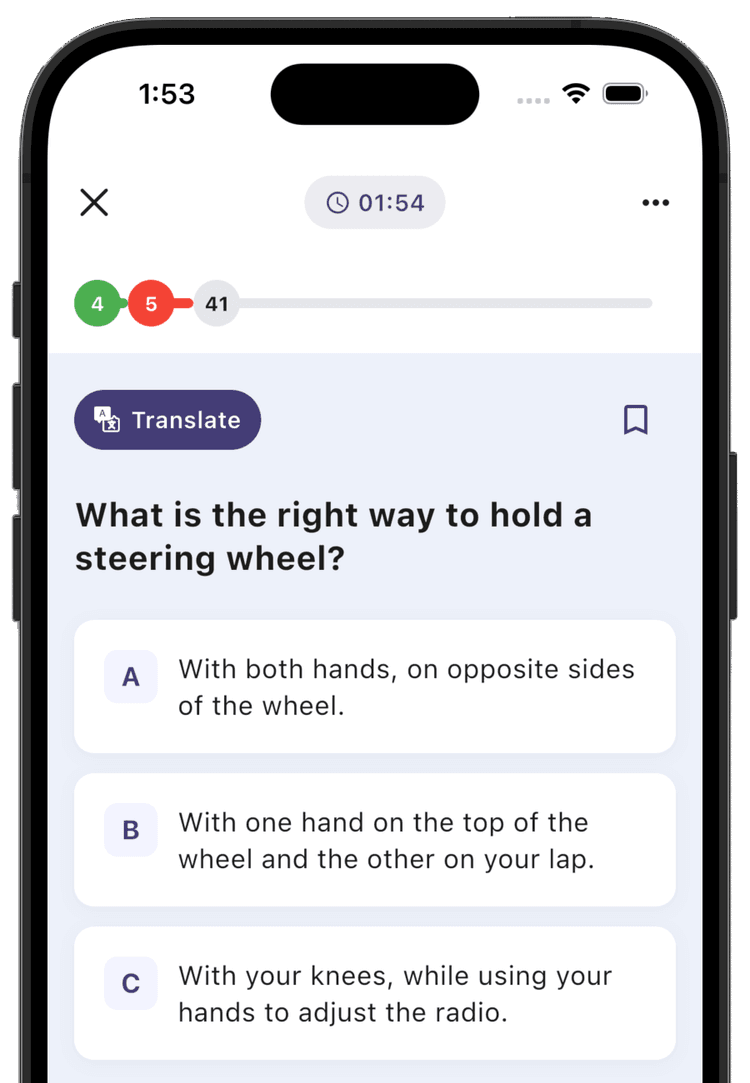
What is the right way to hold a steering wheel?
- With both hands, on opposite sides of the wheel
- With one hand on the top of the wheel and the other on your lap
- With both hands close together at the top of the wheel
Correct answer: With both hands, on opposite sides of the wheel
A firm grip with both hands keeps you in control when the road jolts the wheel. Hit a curb or a pothole with a loose or one-handed hold, and the wheel can pull away from you. A front tire that fails can twist the wheel out of your hands the same way. Hands on opposite sides also let you turn fast in an emergency without moving your grip first, so keep them there all the time, not just when trouble starts. One hand on top and the other on your lap leaves nothing to resist that sudden pull.
What Are You Preparing For?
Select one or more options so we can show you exactly which tests you need to take.
What You Need to Study
General Knowledge
16 sections · 800 questions
The foundation of your CDL exam. Covers traffic laws, safe driving techniques, vehicle inspection procedures, cargo handling, and federal regulations every commercial driver must understand.
Combination Vehicles
9 sections · 180 questions
Essential for driving tractor-trailers. Covers coupling and uncoupling procedures, rollover prevention, inspecting combination vehicles, and safely maneuvering with attached trailers.
Air Brakes
6 sections · 150 questions
Required for any vehicle equipped with air brakes. Covers how air brake systems work, dual air brake systems, inspecting air brakes, and using them safely in all conditions.
Endorsement Tests
Additional endorsements you may need depending on the type of vehicle or cargo you plan to operate.
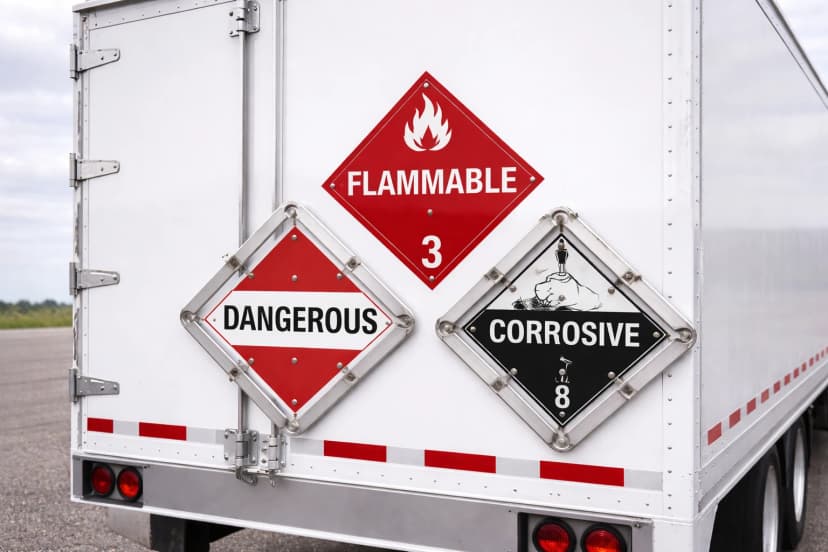
HazMat
9 sections · 202 questions
Required for transporting hazardous materials. Covers placarding, labeling, loading procedures, emergency response, and compliance with federal hazmat regulations.
Tanker
6 sections · 133 questions
Required for driving tank vehicles used to transport liquids or gases in bulk. Covers safe loading, unloading, and driving techniques specific to tanker operations.
Doubles & Triples
7 sections · 144 questions
Required for pulling double or triple trailers. Covers coupling and uncoupling multiple trailers, safe driving practices, and inspection procedures for multi-trailer rigs.
Passenger
6 sections · 123 questions
Required for operating vehicles designed to transport 16 or more passengers. Covers passenger safety, loading, emergency exits, and pre-trip inspection requirements.
Your Path to a Commercial Driver's License
To get a CDL, you must first study for and pass the permit exam at the DMV. After you receive your permit, you can take commercial vehicle driving classes and complete the required training. The final step is passing the official driving exam to earn your CDL. Our practice tests help you prepare for the DMV permit exam with real-style questions, and we also provide extra study materials and helpful resources to guide you through the process.
To obtain a CDL in Massachusetts, you must pass the written permit tests that match your license class — General Knowledge for everyone, plus Combination Vehicles and Air Brakes where they apply — at the Massachusetts Department of Motor Vehicles. Similar to a regular driver's license permit exam, these are timed, multiple-choice tests based on the official Massachusetts CDL handbook.
All of our practice material is built from the official Massachusetts CDL handbook and federal resources, and curated by professionals with over 10 years of experience in the commercial transportation industry. Studying with practice tests that mirror the real exam format is one of the most effective ways to pass on your first try.
On this page you'll find free practice tests for all three sections. All 2,500+ questions and the study tools are in the app with a subscription — download the CDL Help app.
Massachusetts CDL Knowledge Test: Format & Requirements
The CDL knowledge (written) test follows the same federal standards in Massachusetts as nationwide. Here's what to expect.
Questions by test
The 80% passing score is a federal standard (FMCSA, 49 CFR 383.135). Question counts follow the AAMVA model used by most states and can vary by state. Always confirm current details with your state's official CDL handbook.
Massachusetts CDL Fees & Licensing
State-charged fees as of June 2026. Amounts change — confirm current fees with the official agency.
CDL Requirements in Massachusetts
- To obtain a Commercial Driver License (CDL) in Massachusetts, you must meet the following eligibility requirements:
- Must be at least 18 years old for intrastate (within Massachusetts) commercial driving. Drivers under 21 receive a "K" restriction (intrastate only).
- Must be at least 21 years old for interstate commercial driving or to transport hazardous materials.
- Must hold a valid Massachusetts Class D (passenger) driver's license.
- Must be a Massachusetts resident with true, fixed, and permanent principal residence in Massachusetts.
- Must prove U.S. citizenship or lawful permanent residency. Acceptable documents include U.S. birth certificate, U.S. passport, certificate of naturalization/citizenship, Permanent Resident Card, Employment Authorization Document, or I-94 with foreign passport/visa.
- Must complete a medical examination and provide a valid Medical Examiner's Certificate from a certified medical examiner listed on the FMCSA National Registry. Medical certificates valid for maximum 2 years.
- Must pass the General Knowledge written test and any applicable endorsement knowledge tests. Knowledge tests available in English, Spanish, and Portuguese.
- Must obtain a Commercial Learner's Permit (CLP) before taking the CDL skills test; the CLP must be held for at least 14 days. CLP valid for 180 days, renewable once. CLP fee: $30.
- Must pass a three-part skills test (90 minutes total, 30 minutes per segment): pre-trip vehicle inspection, basic vehicle control, and on-road driving. Maximum 6 skills test attempts per 12-month period.
- Entry Level Driver Training (ELDT) is required for all original Class A and Class B CDL applicants, those upgrading from Class B to Class A, and those adding Passenger (P), School Bus (S), or Hazmat (H) endorsements.
- Must not have a "prohibited" status in the federal Drug & Alcohol Clearinghouse (DACH).
- Must pass a TSA security threat assessment for Hazmat endorsement.
- CDL classes: Class A (combination vehicles over 26,001 lbs GCWR), Class B (single vehicles over 26,001 lbs GVWR), Class C (vehicles designed to transport 16+ passengers or hazmat).
- Endorsements available: H (Hazmat), N (Tank), P (Passenger), S (School Bus), T (Double/Triple Trailers), X (Hazmat + Tank). Endorsement fee: $10 with CLP application; $30 if added later.
- CDL license fee: $75. Massachusetts CDLs are valid for 5 years.
Official Massachusetts CDL Handbook
The official Massachusetts Commercial Driver's License Manual covers every topic tested on the state's CDL knowledge exam — but it reads like a dense reference manual, not a structured study guide. A more effective way to prepare is with our General Knowledge practice tests. Our free Massachusetts CDL permit practice test mirrors the format and content of the official exam and is fully up to date as of February 2026. Each practice test features 20 questions covering essential topics such as vehicle inspection, safe driving techniques, air brakes, cargo securement, driving emergencies, hazardous conditions, and Massachusetts-specific commercial driving regulations. Unlike the official test, every practice question comes with a helpful hint and a detailed explanation of the correct answer — so you actually learn from every question you answer.
- Complete CDL regulations and Massachusetts-specific requirements
- Safe driving techniques, vehicle inspection, and cargo handling
- All endorsement categories and testing requirements
CDL Practice Tests in Nearby States
Testing near Massachusetts? Practice for a neighboring state's CDL exam too.
Non-Domiciled CDL Information
Important information about non-domiciled commercial driver's licenses in Massachusetts.
Federal regulations on non-domiciled CDLs are changing rapidly. The information below reflects the latest known state actions.
Massachusetts operates a Non-Domiciled Commercial Program for individuals domiciled in a foreign jurisdiction who are legally present in the U.S. and working in Massachusetts. On September 29, 2025, the RMV paused issuance of all non-domiciled commercial driver credentials due to the FMCSA Interim Final Rule. On January 28, 2026, the RMV relaunched the Non-Domiciled Commercial Program, reverting to federal regulations in place prior to the September 29, 2025 IFR. Applicants must be Massachusetts residents, hold a current active Class D license, have lawful presence with a minimum 12-month authorized stay, and provide a valid SSN. All non-domiciled CDL transactions must be conducted in person at an RMV Service Center. Applicants domiciled in Canada or Mexico are not eligible. Under the FMCSA final rule published on February 13, 2026, eligibility is now limited to H-2A, H-2B, and E-2 visa holders. Affected drivers should contact the Massachusetts RMV for the most current information.[mass][mass][FMCSA Final Rule]
English Language Proficiency (ELP)
Federal ELP enforcement applies to all CDL holders nationwide.
Federal ELP enforcement applies to all CDL holders nationwide. Here is how it is enforced in Massachusetts.
Massachusetts does not currently administer a separate state-level English Language Proficiency (ELP) test for CDL applicants. However, all Massachusetts CDL holders are subject to federal ELP enforcement, which took effect on June 25, 2025. Under this enforcement, roadside inspectors conduct a two-step assessment: first, a conversational interview in English — no interpreters or translation tools are permitted — to evaluate whether the driver can communicate sufficiently in English; second, the driver must demonstrate the ability to read and interpret standard U.S. traffic signs. Drivers who fail either step of the assessment are placed out of service under CVSA guidelines. Massachusetts CDL applicants should be prepared to demonstrate English proficiency during any roadside inspection or compliance review.
Save your misses — the app re-asks them at the right time
Web progress isn't saved when you finish. With a subscription, the app keeps every missed question and brings it back with spaced review — and unlocks all 2,500+ questions. Free to start.

4.96,500+ ratingsacross app stores