
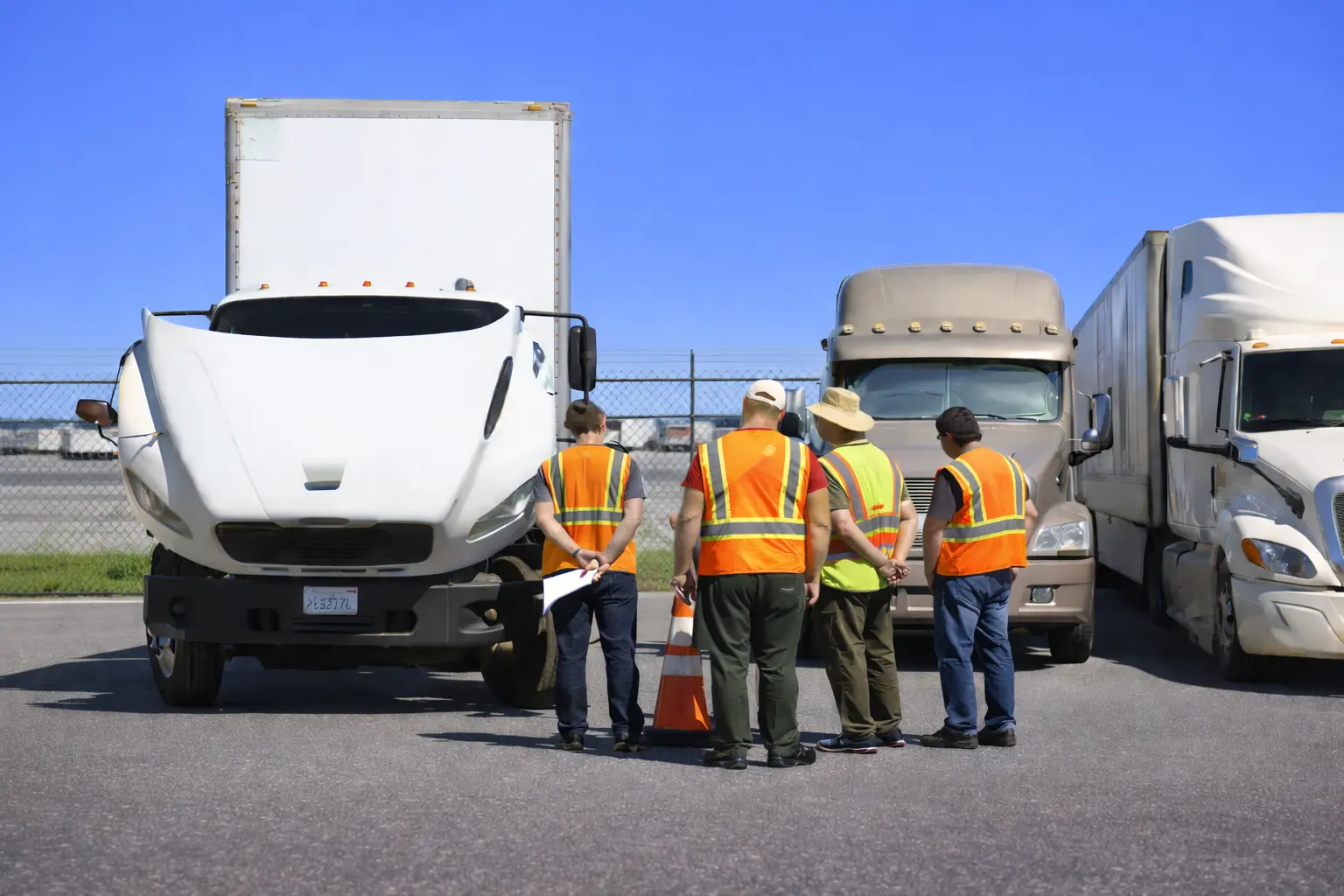
California CDL Practice Test 2026 — Free Prep
Pass your California CDL permit exam with 80%+ on the first try
- Questions 50
- To pass 40/50 correct (80%)
- Updated August 2026
- Free on this site
What You Need to Study
General Knowledge
The foundation of your CDL exam. Covers traffic laws, safe driving techniques, vehicle inspection procedures, cargo handling, and federal regulations every commercial driver must understand.
Combination Vehicles
Essential for driving tractor-trailers. Covers coupling and uncoupling procedures, rollover prevention, inspecting combination vehicles, and safely maneuvering with attached trailers.
Air Brakes
Required for any vehicle equipped with air brakes. Covers how air brake systems work, dual air brake systems, inspecting air brakes, and using them safely in all conditions.
Endorsement Tests
HazMat
Required for transporting hazardous materials. Covers placarding, labeling, loading procedures, emergency response, and compliance with federal hazmat regulations.
Tanker
Required for driving tank vehicles used to transport liquids or gases in bulk. Covers safe loading, unloading, and driving techniques specific to tanker operations.
Doubles & Triples
Required for pulling double or triple trailers. Covers coupling and uncoupling multiple trailers, safe driving practices, and inspection procedures for multi-trailer rigs.
Passenger
Required for operating vehicles designed to transport 16 or more passengers. Covers passenger safety, loading, emergency exits, and pre-trip inspection requirements.
Free California CDL Practice Tests — Your Complete Study Guide
What should you do when merging?
- Merge at a much lower speed than the flow of traffic.
- Use your mirrors to make sure the gap in traffic is large enough for you to enter safely.
- Merge without signaling.
Documents related to hazardous materials transportation must be stored ___.
- In the pouch of the driver door.
- Attached to the sun visor.
- In a box on the trailer.
Which of these statements about driving through a tunnel is correct?
- Keep windows open for fresh air.
- Turn off all lights inside the truck.
- There may be strong winds when exiting.
Among these vehicles, which is more likely to experience off-tracking during turns?
- Tractor with 45-feet trailer.
- 28-feet box truck
- 45-feet straight truck
Under what circumstances should you sound your horn?
- If it helps to avoid a crash.
- To let others know you are running late.
- To say hello to a friend on the sidewalk.
Identify the incorrect statement regarding alcohol consumption.
- A drinker can control how fast his or her body absorbs alcohol.
- Alcohol goes directly from the stomach to the blood stream.
- BAC is determined by how fast you drink; how much you drink and how much you eat.
If your vehicle is missing ____ or more leaves from any leaf spring, it won't be allowed to be used.
- 1/3
- 1/4
- 1/2
Select the correct statement regarding the transportation of hazardous materials.
- Any truck carrying any amount of hazardous materials must have placards.
- Hazardous materials can be disposed of in regular trash bins if the containers are sealed.
- All hazardous materials present health and safety danger.
To figure out how much alcohol is in someone's blood (BAC), you need to know:
- Their height.
- The time of day they drink alcohol
- Their weight.
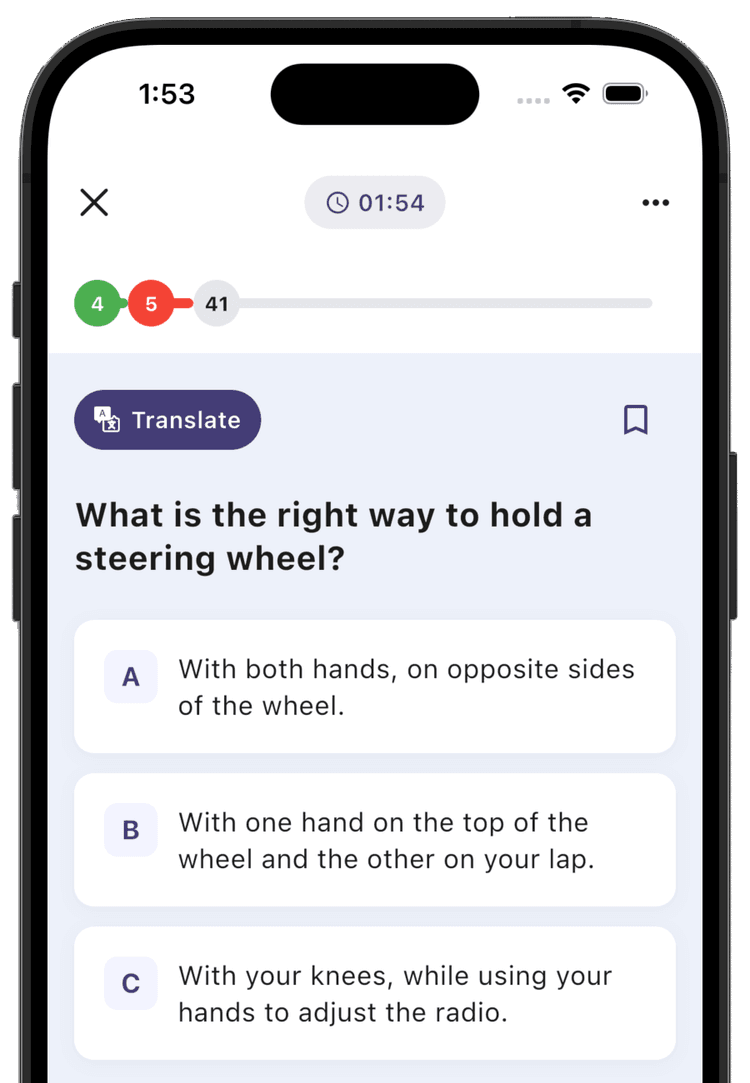
What is the right way to hold a steering wheel?
- With one hand on the top of the wheel and the other on your lap.
- With your knees, while using your hands to adjust the radio.
- With both hands, on opposite sides of the wheel.
What Are You Preparing For?
Select one or more options so we can show you exactly which tests you need to take.
What You Need to Study
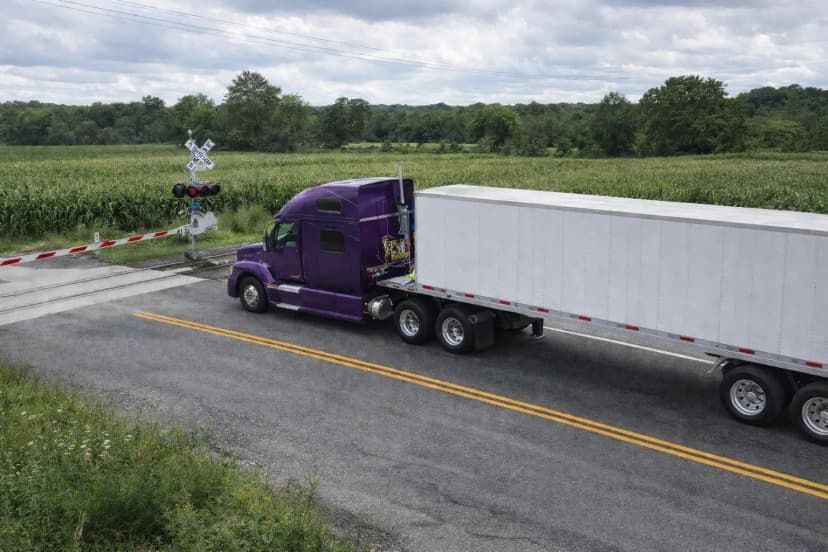
General Knowledge
16 sections · 800 questions
The foundation of your CDL exam. Covers traffic laws, safe driving techniques, vehicle inspection procedures, cargo handling, and federal regulations every commercial driver must understand.
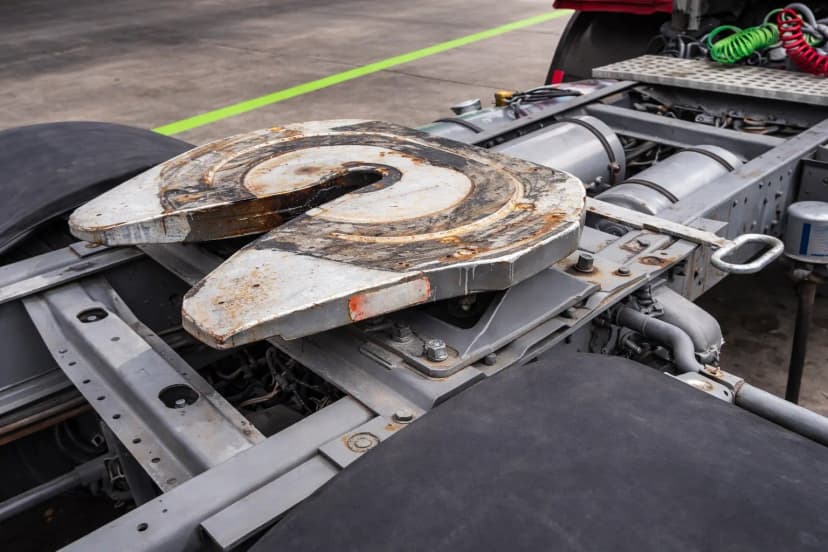
Combination Vehicles
9 sections · 180 questions
Essential for driving tractor-trailers. Covers coupling and uncoupling procedures, rollover prevention, inspecting combination vehicles, and safely maneuvering with attached trailers.
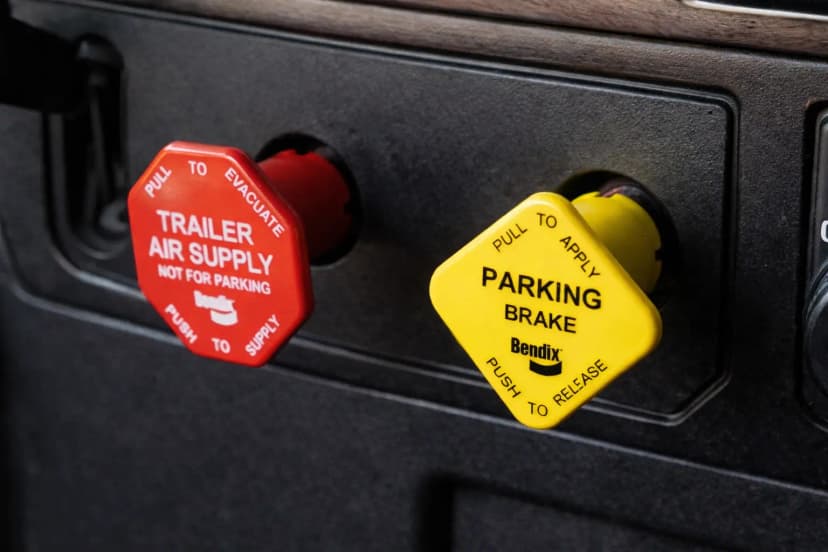
Air Brakes
6 sections · 150 questions
Required for any vehicle equipped with air brakes. Covers how air brake systems work, dual air brake systems, inspecting air brakes, and using them safely in all conditions.
Endorsement Tests
Additional endorsements you may need depending on the type of vehicle or cargo you plan to operate.
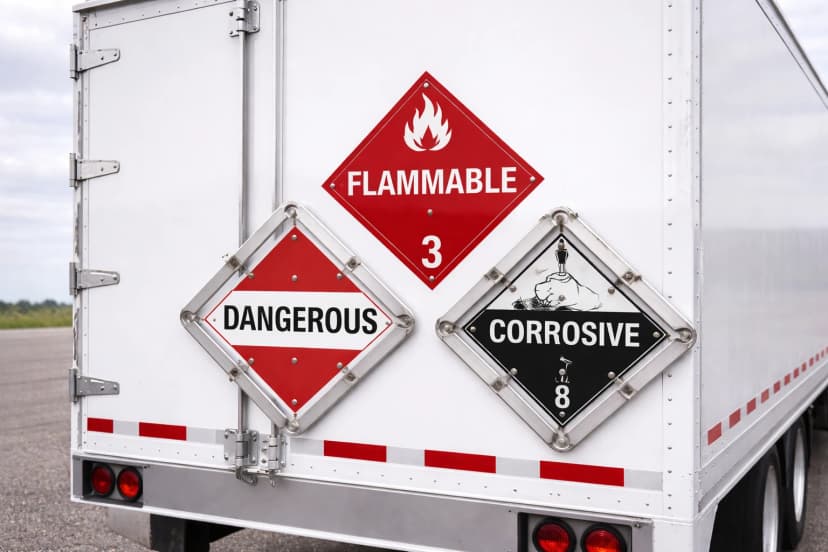
HazMat
9 sections · 202 questions
Required for transporting hazardous materials. Covers placarding, labeling, loading procedures, emergency response, and compliance with federal hazmat regulations.
Tanker
6 sections · 133 questions
Required for driving tank vehicles used to transport liquids or gases in bulk. Covers safe loading, unloading, and driving techniques specific to tanker operations.
Doubles & Triples
7 sections · 144 questions
Required for pulling double or triple trailers. Covers coupling and uncoupling multiple trailers, safe driving practices, and inspection procedures for multi-trailer rigs.
Passenger
6 sections · 123 questions
Required for operating vehicles designed to transport 16 or more passengers. Covers passenger safety, loading, emergency exits, and pre-trip inspection requirements.
Your Path to a Commercial Driver's License
To get a CDL, you must first study for and pass the permit exam at the DMV. After you receive your permit, you can take commercial vehicle driving classes and complete the required training. The final step is passing the official driving exam to earn your CDL. Our practice tests help you prepare for the DMV permit exam with real-style questions, and we also provide extra study materials and helpful resources to guide you through the process.
To obtain a CDL in California, you must pass the written permit tests that match your license class — General Knowledge for everyone, plus Combination Vehicles and Air Brakes where they apply — at the California Department of Motor Vehicles. Similar to a regular driver's license permit exam, these are timed, multiple-choice tests based on the official California CDL handbook.
All of our practice material is built from the official California CDL handbook and federal resources, and curated by professionals with over 10 years of experience in the commercial transportation industry. Studying with practice tests that mirror the real exam format is one of the most effective ways to pass on your first try.
On this page you'll find free practice tests for all three sections. All 2,500+ questions and the study tools are in the app with a subscription — download the CDL Help app.
California CDL Knowledge Test: Format & Requirements
The CDL knowledge (written) test follows the same federal standards in California as nationwide. Here's what to expect.
Questions by test
The 80% passing score is a federal standard (FMCSA, 49 CFR 383.135). Question counts follow the AAMVA model used by most states and can vary by state. Always confirm current details with your state's official CDL handbook.
California CDL Fees & Licensing
State-charged fees as of June 2026. Amounts change — confirm current fees with the official agency.
CDL Requirements in California
- Citizenship and immigration-status requirements apply and changed under 2026 federal rules — verify your eligibility directly with the California Department of Motor Vehicles (DMV) before applying (see Official Sources below).
- Must be at least 18 years old to apply for a CDL for intrastate (within California) commercial driving.
- Must possess a valid California noncommercial Class C driver's license before applying for a Commercial Learner's Permit (CLP) — a temporary or interim license is acceptable.
- If you are between 18 and 20 years old and hold a CDL, you may only drive commercially within California — your load must not originate from outside the state.
- Must be at least 21 years old to operate a commercial motor vehicle that transports interstate commerce or carries hazardous materials or wastes within California or across state lines.
- DMV verifies Entry-Level Driver Training electronically through the federal Training Provider Registry (49 CFR §383.73) before administering a skills test or a hazmat knowledge test — California mandates a minimum of 15 hours of behind-the-wheel training.
- You get three attempts to pass each required knowledge test, with no waiting period to retake one, and DMV does not start a knowledge test within 30 minutes of closing.
- Commercial knowledge tests are given in English, Arabic, Chinese, Punjabi, Russian and Spanish on DMV’s automated testing equipment; the skills test itself is English-only, with no interpreters.
- Must hold your CLP for at least 14 days — valid up to 180 days, renewable once for another 180 — before taking the CDL skills test, which is not given without an appointment.
- After passing the skills test, DMV issues an interim CDL valid for 60 days while the permanent card is mailed; call DMV if it has not arrived after 45 days.
Getting your California CDL permit: the numbered steps, required documents, fees and hold period California Department of Motor Vehicles (DMV) publishes for the commercial learner’s permit (CLP) — sourced and dated below.
California CDL permit (CLP) facts
| Fact | Value | Source |
|---|---|---|
| Original CDL application fee — Class A or B (paid when you apply for your CLP) | $100Nonrefundable | dmv.ca.gov |
| Application validity | 12 months from the application datePass the knowledge and skills tests within 12 months or reapply | dmv.ca.gov |
| Knowledge test attempts (per test, per application) | 3Fail the same test three times and the application is void — you must reapply | dmv.ca.gov |
| Wait before retaking a failed knowledge test | None | dmv.ca.gov |
| Knowledge test languages | English, Arabic, Chinese, Punjabi, Russian and SpanishTaken on DMV’s automated testing equipment; the skills test is English-only | dmv.ca.gov |
| Knowledge test cut-off | Not given within 30 minutes of office closing | dmv.ca.gov |
| Minimum CLP holding period before the skills test | 14 days | dmv.ca.gov |
| CLP validity | 180 days, renewable once for another 180 daysRenewal only if the new expiration is within one year of the application date | dmv.ca.gov |
| When the CLP is issued | After you pass the knowledge test(s) | dmv.ca.gov |
| Minimum age | 18 for in-state (intrastate) driving; 21 for interstate or hazardous materials | dmv.ca.gov |
| Licensing agency | California Department of Motor Vehicles (DMV) | dmv.ca.gov |
How to get a CLP in California
- Hold a standard California noncommercial Class C driver’s license (a temporary or interim license is acceptable). Source
- Complete the online CDL application. Source
- Visit a DMV office: submit the 10 Year History Record Check (DL 939) if you held a license in another state in the last 10 years, the Medical Examination Report (MCSA 5875) and Medical Examiner’s Certificate (MCSA 5876), and your identity and residency documents; pay the nonrefundable application fee; have your thumbprint scanned and photo taken. Source
- Pass the knowledge test(s) — you get three attempts per test, and DMV does not start a knowledge test within 30 minutes of closing. Source
- DMV issues your CLP after you pass the knowledge test(s). Hold it for at least 14 days before you can take the skills test. Source
Official California Department of Motor Vehicles (DMV) links
As of September 2, 2026, verified against California Department of Motor Vehicles (DMV).
California CDL questions
- How much does it cost to apply for a California CDL?
- The original application fee is $100 for a Class A or B CDL and $59 for Class C, per the DMV fee schedule. You pay it when you apply for your commercial learner’s permit, and each skills-test retake costs another $46. Source
- How many times can I take the California CDL knowledge test?
- Three attempts per test on one application. Fail the same test three times and the application is no longer valid — you have to reapply. DMV does not administer knowledge tests within 30 minutes of closing, so arrive early. Source
- How long is a California commercial learner’s permit valid?
- 180 days from issue, renewable once for another 180 days as long as the new expiration date is within one year of your application date. You must hold the CLP for at least 14 days before you can take the skills test. Source
- Can I take the California CDL knowledge test in Russian or Spanish?
- Yes. The California Commercial Driver Handbook states the commercial knowledge tests are available in English, Arabic, Chinese, Punjabi, Russian and Spanish, taken on DMV’s automated testing equipment. The skills test, however, must be conducted in English and interpreters are prohibited. Source
Official California CDL Handbook
The official California Commercial Driver License Handbook covers every topic tested on the state's CDL knowledge exam — but its dense, reference-style format makes it difficult for self-study. A more effective preparation tool is our set of General Knowledge practice tests. Our free California CDL permit practice test is structured to closely match the format and content of the official exam. Each test includes 20 questions covering critical topics such as vehicle inspection, safe driving techniques, air brakes, cargo securement, driving emergencies, hazardous conditions, and California-specific commercial driving regulations. Unlike the official test, every practice question comes with a helpful hint and a detailed explanation of the correct answer — so you learn from every question, not just the ones you get right.
- Complete CDL regulations and California-specific requirements
- Safe driving techniques, vehicle inspection, and cargo handling
- All endorsement categories and testing requirements
CDL Practice Tests in Nearby States
Testing near California? Practice for a neighboring state's CDL exam too.
Non-Domiciled CDL Information
Important information about non-domiciled commercial driver's licenses in California.
Federal regulations on non-domiciled CDLs are changing rapidly. The information below reflects the latest known state actions.
California DMV posted its own timeline for this change: after an initial pause, DMV extended the date for non-domiciled CDL action while it worked through the federal transition, publishing updates directly on dmv.ca.gov rather than leaving applicants to a generic federal notice.[State DMV][State DMV]
Under the FMCSA final rule published February 13, 2026 (effective March 16, 2026), eligibility for non-domiciled CLPs and CDLs nationwide now depends on holding a specific immigration status, and many states — California included — have paused or restricted non-domiciled issuance while implementing the rule. CDL Help does not provide legal or immigration advice, and these requirements are changing quickly — before applying, confirm your specific situation directly with the California DMV and the official FMCSA resources linked below.[State DMV][State DMV][FMCSA Final Rule]
English Language Proficiency (ELP)
Federal ELP enforcement applies to all CDL holders nationwide.
Federal ELP enforcement applies to all CDL holders nationwide. Here is how it is enforced in California.
Federal English Language Proficiency (ELP) enforcement has applied to CDL holders nationwide since June 25, 2025: roadside inspections are conducted in English, and drivers who do not pass an English Proficiency Assessment can be placed out of service. How testing and enforcement are administered in California can change — check the official sources below for current details.
California CDL facts
| Fact | Value | Source |
|---|---|---|
| Original CDL application fee — Class A or B (paid when you apply for your CLP) | $100Nonrefundable | dmv.ca.gov |
| Original CDL application fee — Class C | $59 | dmv.ca.gov |
| Application validity | 12 months from the application datePass the knowledge and skills tests within 12 months or reapply | dmv.ca.gov |
| Knowledge test attempts (per test, per application) | 3Fail the same test three times and the application is void — you must reapply | dmv.ca.gov |
| Wait before retaking a failed knowledge test | None | dmv.ca.gov |
| Knowledge test languages | English, Arabic, Chinese, Punjabi, Russian and SpanishTaken on DMV’s automated testing equipment; the skills test is English-only | dmv.ca.gov |
| Minimum CLP holding period before the skills test | 14 days | dmv.ca.gov |
| CLP validity | 180 days, renewable once for another 180 daysRenewal only if the new expiration is within one year of the application date | dmv.ca.gov |
| Minimum age | 18 for in-state (intrastate) driving; 21 for interstate or hazardous materials | dmv.ca.gov |
| Skills test appointment | Required — skills tests are not given without an appointmentBook online or call 1-800-777-0133 (8 a.m.–5 p.m., Monday–Friday) | dmv.ca.gov |
| Skills test attempts | 3 tries; a retest fee is due each time | dmv.ca.gov |
| Skills (driving) test retest fee | $46 | dmv.ca.gov |
| Skills test parts | Vehicle inspection, basic control skills and road testFail one part and the remaining parts are postponed | dmv.ca.gov |
| After passing the skills test | Interim CDL valid for 60 days while the card is mailedCall 1-800-777-0133 if the card has not arrived after 45 days | dmv.ca.gov |
| ELDT verification | DMV checks the federal Training Provider Registry electronically before a skills test or a hazmat knowledge test | dmv.ca.gov |
| Licensing agency | California Department of Motor Vehicles (DMV) | dmv.ca.gov |
How to get a CDL in California
- Hold a standard California noncommercial Class C driver’s license (a temporary or interim license is acceptable). Source
- Complete the online CDL application. Source
- Visit a DMV office: submit the 10 Year History Record Check (DL 939) if you held a license in another state in the last 10 years, the Medical Examination Report (MCSA 5875) and Medical Examiner’s Certificate (MCSA 5876), and your identity and residency documents; pay the nonrefundable application fee; have your thumbprint scanned and photo taken. Source
- Pass the knowledge test(s) — you get three attempts per test, and DMV does not start a knowledge test within 30 minutes of closing. Source
- DMV issues your CLP after you pass the knowledge test(s). Hold it for at least 14 days before you can take the skills test. Source
- Complete Entry-Level Driver Training if the federal rule covers you — DMV verifies ELDT electronically before it administers a skills test. Source
- Schedule a skills test appointment online or at 1-800-777-0133 — skills tests are not given without one. Source
- Pass the vehicle inspection, basic control skills and road test (three tries; a retest fee each time), then drive on a 60-day interim CDL until your card arrives in the mail. Source
Official California Department of Motor Vehicles (DMV) links
As of September 2, 2026, verified against California Department of Motor Vehicles (DMV).
California CDL questions
- How much does it cost to apply for a California CDL?
- The original application fee is $100 for a Class A or B CDL and $59 for Class C, per the DMV fee schedule. You pay it when you apply for your commercial learner’s permit, and each skills-test retake costs another $46. Source
- How many times can I take the California CDL knowledge test?
- Three attempts per test on one application. Fail the same test three times and the application is no longer valid — you have to reapply. DMV does not administer knowledge tests within 30 minutes of closing, so arrive early. Source
- How long is a California commercial learner’s permit valid?
- 180 days from issue, renewable once for another 180 days as long as the new expiration date is within one year of your application date. You must hold the CLP for at least 14 days before you can take the skills test. Source
- Can I take the California CDL knowledge test in Russian or Spanish?
- Yes. The California Commercial Driver Handbook states the commercial knowledge tests are available in English, Arabic, Chinese, Punjabi, Russian and Spanish, taken on DMV’s automated testing equipment. The skills test, however, must be conducted in English and interpreters are prohibited. Source
- Do I need an appointment for the California CDL skills test?
- Yes — skills tests are not given without an appointment. Schedule online or call 1-800-777-0133 (8 a.m.–5 p.m., Monday–Friday). If you fail any part, the remaining parts are postponed; you get three tries and pay a retest fee each time. Source
- Do I need ELDT before the California CDL skills test?
- If the federal ELDT rule covers you, yes — federal law (49 CFR §383.73) requires DMV to electronically verify that you completed Entry-Level Driver Training before it administers a skills test or a hazardous materials knowledge test. You can book the appointment first, but the training must be complete by the appointment date. Source
Save your misses — the app re-asks them at the right time
Web progress isn't saved when you finish. With a subscription, the app keeps every missed question and brings it back with spaced review — and unlocks all 2,500+ questions. Free to start.

4.96,500+ ratingsacross app stores